
Shrew – Woman given to railing or scolding. Elizabethan definition.
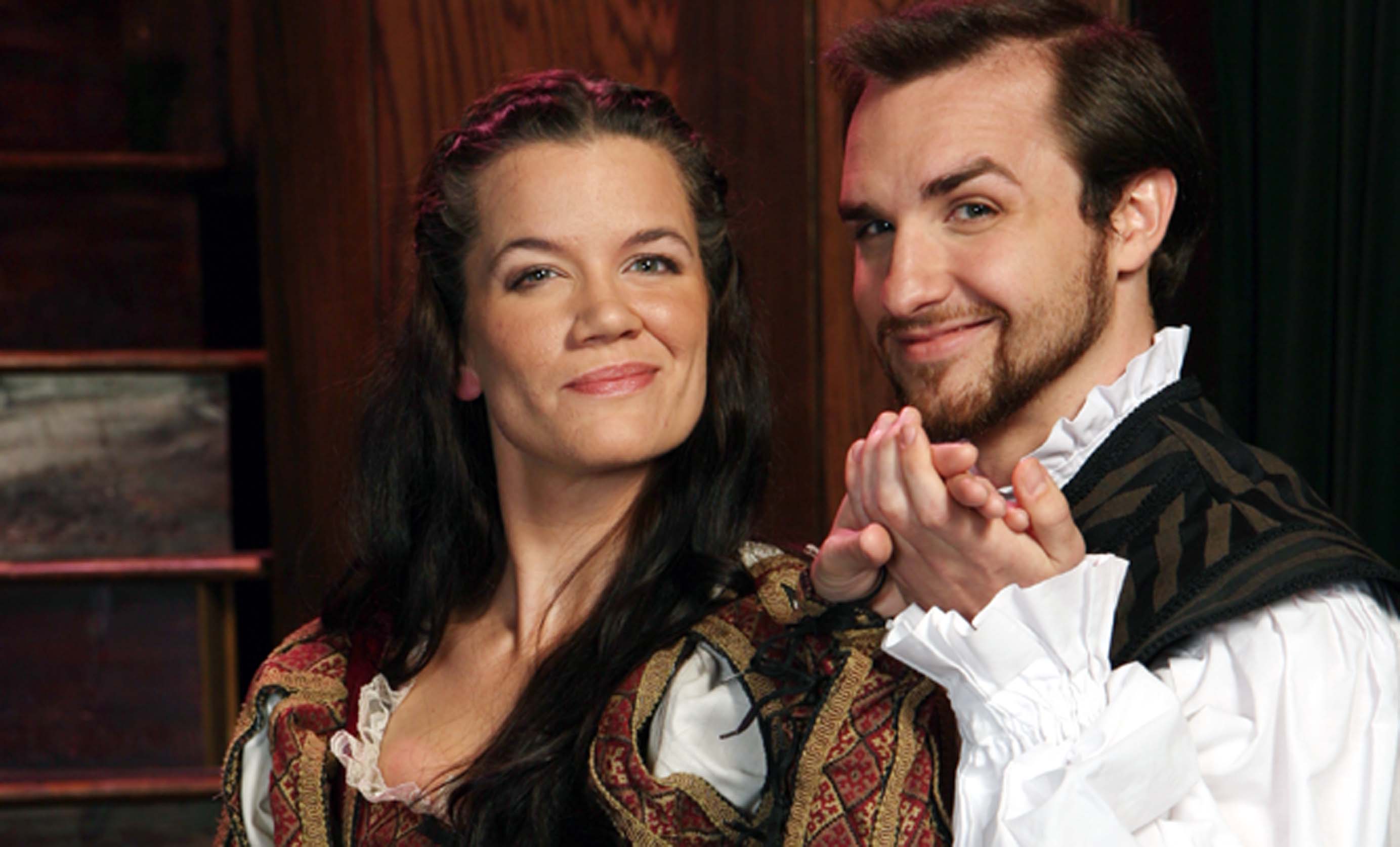
Have you had a chance to view PBS’s second season of “Uncovering Shakespeare” yet? I binged watched it Sunday. It was an ideal way to pass a rainy afternoon. Morgan Freeman hosted the episode on “Taming of the Shrew”. While I thought it offered some wonderful insight, I don’t think it answered the question: Did Petruchio tame the shrew? This is a debate scholars just can’t seem to agree upon.
For those of you unfamiliar with the play, the plot is one of Shakespeare’s simplest.
Minola Baptista is a wealthy man living in the fictitious city of Padua. Babtista has two daughters: the older opinionated shrewish Katherine, and the lovely young Bianca.
Bianca has two suitors while Katherine has none. Baptista refuses to let anyone court Bianca until Katherine is married. It was not uncommon in the Elizabethan era to refuse a younger sister’s hand until the older one was married. Petruchio, a brash retired military man, arrives in town looking to marry a woman with a large dowry. Bianca’s suitors talk him into wooing Katherine so that Bianca is free to wed.
Though not keen on marrying anyone, Katherine is quickly taken in by Petruchio’s banter and unorthodox manner. The two wed, leaving Bianca to choose between her two suitors. The loser ends up marrying a wealthy widow. Everyone seems happy, or are they? This is the beginning of the debate.
The scholarly debate does not start with the events leading up to Katherine and Petruchio’s wedding. It’s the events right after, and leading up to the end of the play that encourages so much debate It’s the treatment of Katherine by her new husband that is hotly debated. It starts with Petruchio’s embarrassing speech at their reception, to his cruel treatment of her at home. It’s his “taming of the shrew” that bothers a lot of scholars.
Over the years I’ve sat on the fence, wondering if this play should be treated as a beloved screwball comedy or a misogynist view of marriage. It wasn’t until I started looking at the play backwards, did it dawn on me, that no, Petruchio did not tame the shrew. I propose that the “shrew” learned that love and marriage is the most important aspect of life. By marrying a man that matched her wit, she found true happiness.
Let’s start with the very last speech of the play, given to us by Katherine. She has shocked her friends and family by allowing Petruchio to toss her hat way because he does not like how it looked on her. Petruchio then instructs Katherine to explain to the horrified women the duty they owe their husbands. Katherine complies:
Fie, fie! unknit that threatening unkind brow,
And dart not scornful glances from those eyes
To wound thy lord, thy king, thy governor.
It blots thy beauty as frosts do bite the meads,
Confounds thy fame as whirlwinds shake fair buds,
And in no sense is meet or amiable.
A woman mov’d is like a fountain troubled-
Muddy, ill-seeming, thick, bereft of beauty;
And while it is so, none so dry or thirsty
Will deign to sip or touch one drop of it.
Thy husband is thy lord, thy life, thy keeper,
Thy head, thy sovereign; one that cares for thee,
And for thy maintenance commits his body
To painful labour both by sea and land,
To watch the night in storms, the day in cold,
Whilst thou liest warm at home, secure and safe;
And craves no other tribute at thy hands
But love, fair looks, and true obedience-
Too little payment for so great a debt.
Such duty as the subject owes the prince,
Even such a woman oweth to her husband;
And when she is froward, peevish, sullen, sour,
And not obedient to his honest will,
What is she but a foul contending rebel
And graceless traitor to her loving lord?
I am asham’d that women are so simple
To offer war where they should kneel for peace;
Or seek for rule, supremacy, and sway,
When they are bound to serve, love, and obey.
Why are our bodies soft and weak and smooth,
Unapt to toil and trouble in the world,
But that our soft conditions and our hearts
Should well agree with our external parts?
Come, come, you forward and unable worms!
My mind hath been as big as one of yours,
My heart as great, my reason haply more,
To bandy word for word and frown for frown;
But now I see our lances are but straws,
Our strength as weak, our weakness past compare,
That seeming to be most which we indeed least are.
Then vail your stomachs, for it is no boot,
And place your hands below your husband’s foot;
In token of which duty, if he please,
My hand is ready, may it do him ease
Yes, I know, the speech is long, so let me break it down for you. Katherine is reminding married women that while their husbands are out toiling in the fields or away at sea, the woman are warm and dry (admittedly she is talking to wealthy women). All that their husbands ask in return is to be loved and obeyed. Arguing with their husbands is pointless and only makes for an unhappy home. Husbands have the final say, so why not submit instead of committing acts of rebellion by “banding word for word, and frown for frown”? In other words, Katherine is reminding married women, it is their job to keep the peace.
Now, before I lose my female readers who may feel this is absolutely unacceptable, let’s bear a few things in mind.
Shakespeare has given Katherine the final say. In fact, Katherine has many of the best lines, the longest lines. And keeping in mind the word, “shrew” as it was used in Shakespeare’s day, refers to a highly opinionated woman. One who is not afraid to express herself. By allowing Katherine to express her views on marriage Shakespeare is keeping true to her “shrewish” nature. There does not seem anything tame about her speech. She scolds the woman much as she did men before she was married.
Let’s also keep in mind that the vow of obedience is still uttered today, though most modern women will say this is a vow that is more bark than bite. Our vows come to us not from our secular worldview, but from the Christian worldview. Looking at the vow from this lens we begin to understand the words Katherine chooses. She reminds the women that their husbands are their lords and should be obeyed as such. Christians, obey and love their Lord. If you reverse this, Christians obey their Lord because the love him. Katherine is telling women they should obey their husband because they love him. And we have to ask, what does she mean by obey?
Much of her speech is centered on arguing. She says, “But now I see our lances are but straws, Our strength as weak, our weakness past compare, That seeming to be most which we indeed least are”. Keep that last line in mind. Katherine is telling the women they are not weak, yet fighting will get them nowhere. The lance of argument is but straw. It will do no harm to men, and only make women feel weak. The stronger woman know when to pick her battles, and knows that arguing for argument makes her a “graceless traitor to her loving lord”.
How do we know this is what Katherine means? Let’s jump to the scene between the newlyweds in which Petruchio tries to goad Katherine into an argument. Why he does this depends on the actor’s point of view. If done right, it seems to suggest Petruchio is testing Katherine’s tameness, and once tested, suggests he is happy to be outwitted.
On their way back to Katherine’s father’s house, Petruchio points to the sun and notes how “shiny the moon is”. Katherine replies that it is the sun. Petruchio declares they are turning around and going home since she wants to argue with him. Katherine realizes the game his is playing, so agrees it is the moon, only to have Petruchio declare it is the sun. Katherine then says:
Then God be blest, it is the blessed sun,
But the sun it is not, when you say it is not;
And the moon changes even as your mind.
What you will have it nam’d, even that it is,
And so it shall be so for Katherine.
Petruchio is at a loss for words. If this scene is played out correctly, both smile. Katherine has picked her battle and Petruchio knows he has just lost because of it.
Let’s look at this from a modern perspective. You and your husband are sitting out on the veranda, sharing an intimate moment. Maybe you are sharing a bottle of wine and good conversation. Suddenly your husband points to Venus and says, “My, that star sure is bright tonight”. You could argue that it is a planet, not a star, getting out your phone sky app to prove it, or you could just smile and agree. After all, you are having such a good time, who cares what he calls it? You might think to yourself, “I married an idiot,” but you don’t say anything because he is your idiot, you love him. Guess what, you just picked your battle. Does this make you tame? No, this makes you strong. You know it is better to enjoy your evening and by agreeing with your husband on these little things, you will ensure a happy marriage. Why offer war, when you can kneel for peace? This, I think is what Katherine is doing. She realizes that by allowing Petruchio to think he is right, she has the upper hand. She gets what she wants. They continue to her father’s house in good spirits. Petruchio knows his wife is not stupid and will speak her mind, but will not engage in an argument for argument sake. They are content with each other.
Next time we will look at the two scenes that bother scholars the most: Petruchio’s “rude” reception speech and his “cruel” treatment of Katherine once he gets her home. We will look at what John Wayne has in common with Petruchio.


 The View From Sari's World
You must be logged in to post a comment.