
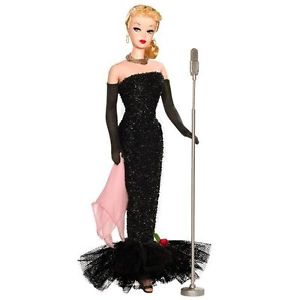
I’m going to go out on a limb here and say that if you were a young girl in the 60’s and 70’s you owned at least one Barbie, possibly more. My own serious obsession with Barbie started in 1968, and didn’t end until 1975. In those 7 years I owned a large collection of Barbies including vintage dolls handed down from older cousins. I had a Barbie Family House, Barbie camper, Barbie jet, and one of the first Barbie sport cars that looked like a cross between a Mustang and Bentley.
Barbie was the toy of the 70’s; her image was everywhere. You couldn’t turn a corner without seeing her blond face. From books to Halloween costumes, to bedding and shoes, Barbie dominated American childhood.
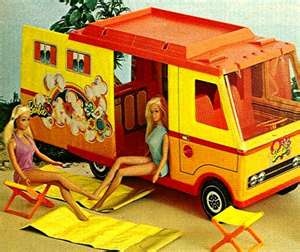
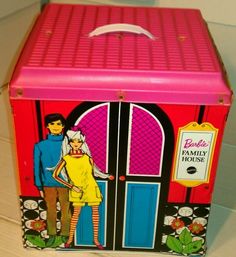
Back then parents didn’t complain about Barbie’s small waist and big chest. The big joke was that Barbie was short on funds, but large on goods. “For a woman that doesn’t have a job, she sure has a lot of stuff”. But over the years this has changed. Mattel, the maker of Barbie, has taken a big hit from groups who feel Barbie gives little girls unrealistic expectations about themselves and wounds pre-adolescent self-esteem. This criticism is why Mattel unveiled a new line of Barbies, a line that includes a long needed variety of skin tone, but also an unnecessary choice of body proportions, which may do more harm than good. You see, Barbie isn’t the problem.

I played with Barbie between the ages of 5 and 11. One of the things I did on my 12th birthday was to pack up all of my Barbies and accessories and lend them to a younger neighbor (a move I still regret, as I never did get them back). As a 12 year old with a new record player and skates, I no longer had any need of my childhood fantasies. At this age I was wise enough to know Barbie was a toy and that no matter how much I played with her, I would never be like Barbie. Truth be told, it was never Barbie I wanted to be or look like in the first place.


In the 1960’s & 1970’s the ideal American beauty was the fresh faced tall, blond, blue eyed, tanned girl. The Beach Boys sang about her in California Girls and shampoo commercials always showed her waving her long blond locks in slow motion. Compound that with the fact that my older cousins, the ones who gave me my first set of Barbies, looked like the perfect Breck Shampoo models, and you can see why I may have had self-esteem issues. I was short, dark haired, and brown eyed. I looked nothing like my cousins or the girls on TV and in fashion magazines. But the truth of this did not hit me until after I stopped playing with Barbie.
I only remember once expressing a desire to look like Barbie. I said this to one of my cousins when I was 6 and after we had seen Sleeping Beauty in the theater (in the 60’s theaters were playing Disney movies in the summer months so kids could see them for the first time on the big screen). It wasn’t Barbie that I wanted to look like, it was princess Aurora that struck my young mind as the perfect female image, and surely Barbie was modeled after her. My cousin laughed and handed me Barbie’s dark haired friend Midge and said this is who I would grow up to look like. I was crushed. I don’t think my cousin was being overtly mean, and I am sure neither one of us knew how deep that statement would cut as I grew into my teen years. Being labeled as not looking like what society deems beautiful is way more damaging than playing with a doll that doesn’t look like you.
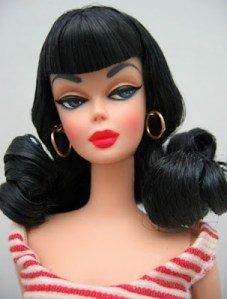
And, after a page of rambling, this is my point about the new and “improved” Barbie.

While I applaud Mattel’s decision to produce dolls with varying hair and skin colors, I am not so sure the curvy doll will do little girls any good. First of all, the target audience for Barbie are preadolescent girls and I’ve yet to see a curvy 8 year old; chubby, yes, but curvy no. I understand that the message Mattel is offering is one that says women are beautiful no matter what your body size, but until society agrees, it won’t be heard. I’m a curvy woman and feel that my body is just fine, but this goes against what society tells us. Not that society should dictate how we feel about ourselves, but the mixed messages that come with the new curvy Barbie may prove to be damaging. Giving a child a doll that you think will most represent her in adulthood is providing a label for the future girl. One that she may not agree is positive.
When a parent offers their child a more true to life curvy Barbie, they are essentially telling that child that she will grow up to look like this, without taking into account the child’s athletic potential or genetic makeup that may be slightly different than her mother’s. We don’t give boys action figures that most represent what we think they will look or be like because we know these are just toys designed for fun. So why is Barbie held to a different standard? Barbie is not the problem.
The problem of body image and the effects it has on young girls is not a result of years of playing with an unrealistic toy. There are many young girls who have never played with a Barbie yet suffer from poor body image. I say to the same groups who pushed Mattel’s change, you should do the same with the media, for this is where the true problem lies. In fact it’s ironic that Barbie started out as a fashion model, and as we all know, fashion models do not represent what the majority of woman look like, so why be pissed off that Barbie doesn’t either? If you are so worried about your daughter’s self esteem issues, why give her a fashion doll in the first place? I have an idea, why not give her a science kit instead and encourage her to change the world?
As a young girl I never seriously considered Barbie to be my personal role model nor did I limit my life choices to what she represented. I used my imagination to explore my future possibilities. But if my cousin had taken away all of my blond Barbies and only allowed me to play with Midge, the idea that I didn’t fit into what society says is beautiful would have only cut deeper. I am afraid that by handing a little girl a true to life curvy doll, her image of herself will not magically improve. She may view her potential self critically and enjoy her teen years less as she waits for the dreaded curves to show themselves. Why can’t we just let little girls have the same fun that we let little boys? Where is the outcry over G.I Joe and his perfect body?
This push for a new Barbie size sounds like misplaced anger. Why don’t we start with the media and work our way down to toys? Until magazines stop airbrushing celebrities, until we stop spending billions on plastic surgery, and worshiping homemade porn stars turned TV stars, the outcry over Barbie rings hollow. If you teach your daughter to love and honor herself no doll will change that.

 The View From Sari's World
You must be logged in to post a comment.