Easter Symbols and Spring Renewal

Easter, the religious holiday that celebrates Jesus Christ’s resurrection from the dead is Christianity’s most important holiday. It is known as a moveable feast because it doesn’t fall on a set on specific date as most holidays do. Instead, Christian churches in the West celebrate Easter on the first Sunday following the first full moon after the vernal equinox on March 21. Therefore, Easter is observed anywhere between March 22 and April 25. This year both Easter and Passover are being celebrated this weekend.

The exact origins of the word Easter is not really clear. The  English historian know as the Venerable Bede (673-735) wrote that the word Easter is derived from Eostre, a Teutonic goddess of spring and fertility. Through a translation error, the term later appeared as esostarum in Old High German, which eventually became Easter in English. In Spanish, Easter is known as Pascua; in French, Paques. These words are derived from the Greek and Latin Pascha or Pasch, for Passover. Jesus’ crucifixion and resurrection occurred after he went to Jerusalem to celebrate Passover (or Pesach in Hebrew), the Jewish festival commemorating the ancient Israelites’ exodus from slavery in Egypt. Pascha eventually came to mean Easter.

It seems probable that around the second century A.D., Christian missionaries seeking to convert the tribes of northern Europe noticed that the Christian holiday commemorating the resurrection of Jesus roughly coincided with the Teutonic springtime celebrations, which emphasized the triumph of life over death. Christian Easter gradually absorbed the traditional symbols.

Easter Symbols:

 Easter Eggs

The Easter egg represents the beginning of a new life. This was symbolic of the advent of Spring which brought with it new life for flora and fauna. Easter eggs were first colored by the pagans to resemble the rising sun and announce the return of light. The northern lights were also painted on the Easter eggs.

Later, an ancient Christian legend spoke of Mary giving the eggs to Roman soldiers and begging them not to kill her son. Subsequently, Easter eggs became a popular gift to give on Easter to bring luck and welfare to the family.; though we have to admit, this did not work out to well for Mary.

In Medieval Europe, eggs were forbidden during Lent. Eggs laid during that time were often boiled or otherwise preserved (pickled eggs anyone?) Eggs were prized Easter gifts for children and servants.

Easter Bunny & Chicks

Baby Rabbits and chicks represent the rebirth of Earth. Spring is a time when the Earth is seen as being reborn. Barren fields become lush green, trees get new foliage and flowers and fruits abound.

The Easter bunny is definitely the most beloved symbol of Easter and extremely popular with children. History indicates that it may have been the hare and not the rabbit who was associated with Easter. The hare is legendary because it is believed to never close its eyes – not even to blink. Rabbits on the other hand are born blind. Hares were thought to be staring at the full moon all through the night. The hare was also a symbol of fertility linked to the Greek goddess of fertility  Eostre. However I am sure we all agree, rabbits are more fertile than hare and far more prolific reproducers, and much more cute.

Easter/Peace Lily 

The white lily is thought to be as pure as Christ and a symbol of the purity of the new life that comes from being resurrected. Here in the West we call these peace Lilies because, let’s be honest, the name Jesus Lily would only sell to a certain market share.

Early Spring is a time of renewal and is sacred to almost all religions. I love this time of year because it is a time of renewal and new hope. Spring fever has hit, and now that the snow is gone I am ready for change. I am all for renewal; Spring Cleaning comes to mind. Tomorrow I will start cleaning out my garden patches to get ready for my herbs and veggies. This year I am going to try to plant a Medieval garden.

Whichever holiday you are celebrating I want to wish you all the very best, and a wonderful new Spring renewal.
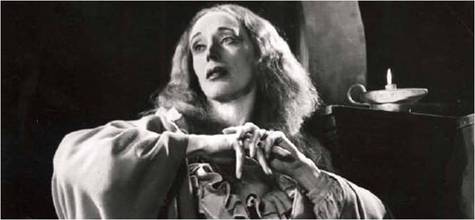
What I Learned From Lady Macbeth

All this month I have been thinking about the women who have helped shaped my life, both knowingly and unknowingly. I have thought about every female I have known from my grandmother to my friends.  I have been lucky to have known so many great women who have touched my life and made me who I am today. I am quite certain I am not alone in this; we all have women to thank.

Instead of writing about the real women in my life, I decided to do a post about a fictional character, one who made a huge impact on my young adult life. As I like to preach, literature can inform us and shape our lives. If we are open enough, each time we read we can learn something new about ourselves or take lessons from the characters we grow to know.  Had I not “met” this woman in high school, I am not sure I would have chosen the right path as I stood at the crossroad of smart vs. dumb choices. This blog is dedicated to Shakespeare’s Lady Macbeth.

Lady Macbeth, as told by Shakespeare, was married to one of the medieval Scottish King Duncan’s generals and had high ambitions for her husband. She convinced him to kill Duncan in order to take the throne.  Once the deed was done, murder begat murder and soon madness overtook the couple. Lady Macbeth took to sleepwalking, wringing her hands as if to wash Duncan’s blood from them. Her famous line “out damn spot, out” is said because of her remorse and guilty conscious.  Never again would she feel clean.

During my senior year in high school, I was caught in a crossroads.  While some of my friends were getting ready to go to college, others were ready to go out do whatever felt good.  I was expected to go to college, but a part of me wanted to go out and do what I wanted which, if I was not careful, would end up being dumb. I was on the verge of doing things I would spend a life time regretting.

Our boring English teacher was replaced mid-semester by a younger vibrant man who decided we needed to learn to appreciate Shakespeare. His first choice, Macbeth. He introduced us to the Bard by being a one man play. I can still recall him on his desk, sword fighting with an invisible foe! He belted out the play and asked that we read along. Many of the lessons went over my head, but when he got to Lady Macbeth’s madness a jolt went through my body. I felt as if someone had hit me, while whispering “this could be you”.

I am not sure if our teacher talked about this, or if I figured it out on my own (I’d like to say I was smart enough to get it). No matter, I got it. There are certain things that we may do that will affect the rest of our life. There are things that we may do that would result in deep regret. Did I want to spend the rest of my life washing my hands of my past deeds? Hell no! There was no way I wanted to be another Lady Macbeth. I vowed right there and then I would never do anything that would make me say “out damn spot out”.

My early 20s were not a good time for me for a variety of reasons. Yes, I did make some dumb choices, but nothing that resulted in deep seeded regret. As a matter of fact, when offered the opportunity to do damaging things I thought back to that day I first heard of Lady Macbeth. Anytime I saw that I might be headed down the wrong path, I thought of her and changed course.  I used her line “out damn spot out” as a talisman; if I felt I may be hanging with the wrong crowd who tried to talk me into joining them in a stupid situation, I muttered the line to myself. This was my way of staying out of danger or personal ruin.

Now that I am older and much wiser, I look back and see that my life could have been a mess. Thankfully the lesson  I learned from Lady Macbeth stayed with me. Thankfully I do not wake up wanting to wash the stain of regret from my hands.  That is the power of literature and why I feel it can shape our lives.

Amazing Waste

Repurposing Food and Reducing Waste

measurestillformeasure

Shakespeare, Classics, Theatre, Thoughts

Nerd Cactus

Quirky Intellect for the Discerning Nerd

Sillyverse

Stories of magic and mystery

Commonplace Fun Facts

Mind-Blowing Facts You Didn’t Know

Fictionophile

Fiction reviews, Bookblogger, Fiction book reviews, books, crime fiction, author interviews, mystery series, cover, love, bookish thoughts...

Patrick W. Marsh

monsters, monsters, everywhere

Shakespeare for Kids Books

Opening the door for kids to love Shakespeare and the classics

desperatelyseekingcymbeline

The 10-year Shakespeare New Year Resolution

Katzenworld

Welcome to the world of cats!

booksandopinions.com

The Book Reviews You Can Trust!

The Book Review Directory

For Readers and Writers

thelitcritguy

screams from the void

Author Adrienne Morris

Step Into the Past—Lose Yourself in the Story.

crafty theatre

ideas inspired by crafty characters

Critical Dispatches

Reports from my somewhat unusual life

The Nerd Nebula

The Nucleus of the Universe for all Nerd Hacks!