Why say Trick or Treat when you can quote Shakespeare?

Depending on where you live, Halloween is right around the corner. As always, many of us are making last minute costumes or trying to assess just how much trick or treat candy we will need this year. I know I keep eyeing the large bag I have, wondering if it will be enough or if by the end of the night, I’ll be sneaking handfuls of candy into burned out neighborhood pumpkins just to get rid of the chocolate temptations. This is about the extent of my Halloween tricks, though it is fun to watch the guy across the street gingerly pick up his pumpkin in awe and then in horror as he realizes there is more damn candy for his boys!

Halloween is one of my favorite holidays; it’s a wonderful excuse to dress up and pretend to be someone else. When I am not dressing up for a party I do enjoy the army of children that stop by. There is always one or two homemade costumes that brings to mind Halloween of old, when stores did not sell ready made masks and flimsy outfits.

I realize a lot of my readers are not aware that store bought costumes are fairly modern or that the first ones, designed in the late 1930, were made out of paper. These paper costumes did not go over too well with the public as they were extremely flammable. So leery was the public that store bought costumes did not really catch on until the 60’s and even then, you were more likely to see homemade costumes on children.

Did you also know that the phrase, “Trick or treat” started out as a veiled threat? I won’t go into the history of the term, you can find a great article on in here, thanks to the History channel but in brief, the term was used to remind folks that chaos would ensue if treats were not freely given.

As I thought about the phrase “Trick or treat” and vintage costumes, it occurred to me that we could really shake things up by going, old, old school this year. Why not bring back creepy homemade costumes and instead of crying “trick or treat”, why not quote Shakespeare? I mean, really, if you want better treats than “fun size” chocolate bars, shouldn’t you put some work into your costume and demands? Let’s see some effort kids! To help you out, I give you seven Shakespeare quotes you can use.

Hamlet

That one may smile, and smile, and be a villain.
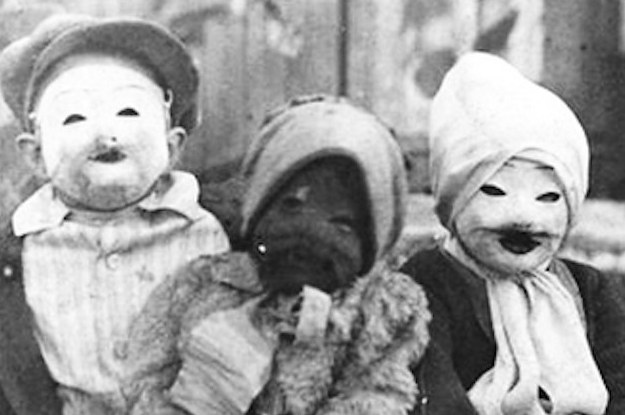
21-vintage-halloween-costumes-that-will-make-your-2-15521-1411424195-6_dblbig

Pity me not, but lend thy serious hearing
To what I shall unfold.

44ccdef45969afea925d1d42203fa8ce

Do not forget. This visitation
Is but to whet thy almost blunted purpose.

06-creepy_vintage_halloween_costumes

Henry IV

Art thou not horribly afraid? doth not thy blood thrill at it?
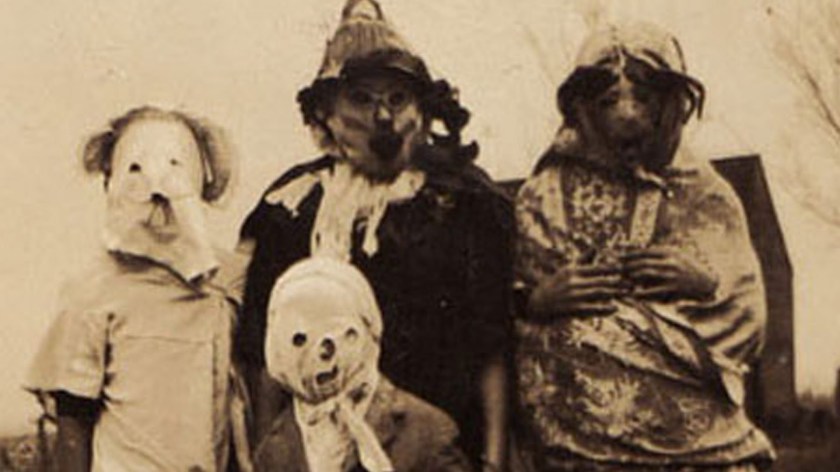
maxresdefault

The Tempest

Hell is empty, and all the devils are here!
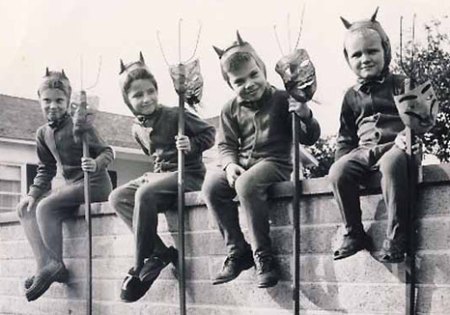
devils-on-a-fence

Macbeth

Fair is foul, and foul is fair Hover through the fog and filthy air

enhanced-29512-1411407701-1And my very favorite:

By the pricking of my thumbs,
Something wicked this way comes.

067b8ff5a5f346a6bc50ec1406f237a4


Shakespeare’s Prop Room- a review

9781476663364
McFarland & Company 2016


“Shakespeare’s Prop Room an Inventory” is hard to pin down. While at times it offers insight into Elizabethan theater life and may prove useful to theater groups, its arguments tend to be self-serving and a little questionable. If you are wondering why a book about props would propose arguments at all, let me assure you, this book offers more than a scholarly look at props; at times is reads as if the authors believe the plays to be some missing Christian gospels, which left me with a feeling of unease.

I blame Ralph Alan Cohen for setting me up. I was so eager to dive into the book after reading his foreword. In it he writes in part:

Crass considerations can get us deeper into the plays…What might a show look like? What was on stage? What were they holding? What objects are we dealing with?”

“And that is the question that Shakespeare’s props asks so well, questions that unlocks so much…It is a book that points but does not push the reader towards answers. …it is material to an understanding of the plays and matters to the production of a performance”.

I am not convinced Cohen read the entire book before he wrote the foreword. The first two chapters “Bring out your dead”, and “Off with his head” are highly enjoyable and as promised, offer some understanding of the plays; I can see both chapters as valuable material to any modern theater group looking for a deeper understanding of the norms and customs of Shakespeare’s day. But starting with chapter 3, Exit pursued by a bear” ,the book shifts focus and uses biblical passages to make the argument that Shakespeare relied heavily on the Bible for his imagery and made good use of his plays as arguments for Christianity. This is an odd argument to make, given that scholars know he used Ovid and older plays as his primary source material. The chapter is brief, (and possibly unnecessary as there are few animals in the plays) but somehow manages to talk about everything from Macbeth’s hounds of hell, to that of man taming his own inner beast, and then jumps to Caliban-is he man or fish-which somehow turns to Jonah and the whale. The author even finds the time to remind us on page 46 that, “God assures us we are made in his image, in his likeness, and like Prospero, have dominion over the fish of the sea…”

This short rambling chapter seemed so widely out of place that I had to read it twice to find any connection to the book it sits in. I am still not sure what any of this has to do with Shakespeare’s prop room.

In chapter 9, Welcome to our table”, the authors state “Behind every dinner lurked the last supper”. So much for Cohen’s claim that the authors points but does not push the reader towards answers. As part of their biblical argument the authors cite Jan Kott, a critic known to have interpreted the plays in light of existentialism, and his own personal experiences. The choice of Kott seems a little odd until one realizes he is used to bolster the authors’ Shakespeare/Christian argument.

A few chapters later we return to talking of props and their use with no mention of Christian leanings. As I read these later chapters, it dawned on me that the two authors may not have collaborated much. Perhaps each took a few chapter subjects and wrote separately. If this were true it would go a long way to explain why some chapters tend towards the utilitarian use of props while others towards the Bible as a metaphorical prop in Shakespeare’s plays.

If you sift through the biblical references and table some of the arguments for later, you may enjoy the book as a theater prop guide. Be warned, it is not the book Ralph Alan Cohen read, which is too bad because that book sounds amazing.

I received this book from Librarything’s Early Reader program in exchange for a fair and honest review.

Amazing Waste

Repurposing Food and Reducing Waste

measurestillformeasure

Shakespeare, Classics, Theatre, Thoughts

Nerd Cactus

Quirky Intellect for the Discerning Nerd

Self-Centric Design

The art of designing your life

Sillyverse

Stories of magic and mystery

Commonplace Fun Facts

Mind-Blowing Facts You Didn’t Know

Fictionophile

Fiction reviews, Bookblogger, Fiction book reviews, books, crime fiction, author interviews, mystery series, cover, love, bookish thoughts...

Patrick W. Marsh

monsters, monsters, everywhere

Shakespeare for Kids Books

Opening the door for kids to love Shakespeare and the classics

desperatelyseekingcymbeline

The 10-year Shakespeare New Year Resolution

Katzenworld

Welcome to the world of cats!

booksandopinions.com

The Book Reviews You Can Trust!

The Book Review Directory

For Readers and Writers

thelitcritguy

screams from the void

Author Adrienne Morris

Step Into the Past—Lose Yourself in the Story.

crafty theatre

ideas inspired by crafty characters

Critical Dispatches

Reports from my somewhat unusual life