What was he thinking?

Michelangelo_Sündenfall
The fall depicted in the Sistine Chapel by Michelangelo

During my junior year of undergrad studies my counselor talked me into taking a class titled, “Good vs. Evil”. Katie said I would love it as the class combined literature and critical thinking in order to better understand that what we think of as evil is not always the case. Our professor chose to use three takes on the Faust legend as our focal point. Having never been exposed to Faust, I was thrilled at the chance to study his story in detail.

The good professor started us off using few short stories, only one of which I can remember. To be honest, as much as I thoroughly enjoyed studying the works of Marlow, Goethe and Mann, the promise of a better understanding of what we think of evil fell short of my expectations; we really never did get into the subject, but we really got into Faust’s head!

The class has stuck with me, not because of what we learned, but because of what it could have been. Our professor started us out with a biblical tale and asked us if Satan was really acting evil. What struck me odd about this story (we will get to it in a moment) was the fact that Satan wasn’t even involved (even though some churches insist he was). As I read the story, a different question came to my mind, one that was better suited to the class premise: (see down below) As I sat and stared at the story another question came to mind, again one that was better suited to the premise: What the heck was God thinking? Why did he do what he did?

I posed this question today on Twitter. I did not expect much of a response. It was one of those brain droppings we all have from time to time. But not surprisingly, a core group of my Twitter friends, ones who are always ready to discuss big topics, came thru and attempted to answer the question. These guys are some of the smartest people I have had the pleasure of coming across. Not satisfied to just answer my question, each wanted to talk about the symbolism and history of the story. As much as I love them for it, I really just wanted to discuss the literal question. I just wanted a few people to sit back and wonder, “Yeah, why did he do that?” but I had such a good time reading the responses and letting the question take my friends in a whole different direction, I thought I would pose it here.

With that in mind, here is the story. The questions will be posted below.

Now the serpent was more crafty than any of the wild animals the Lord God had made. He said to the woman, “Did God really say, ‘You must not eat from any tree in the garden’?”

The woman said to the serpent, “We may eat fruit from the trees in the garden, but God did say, ‘You must not eat fruit from the tree that is in the middle of the garden, and you must not touch it, or you will die.’”

“You will not certainly die,” the serpent said to the woman. “For God knows that when you eat from it your eyes will be opened, and you will be like God, knowing good and evil.”

When the woman saw that the fruit of the tree was good for food and pleasing to the eye, and also desirable for gaining wisdom, she took some and ate it. She also gave some to her husband, who was with her, and he ate it. Then the eyes of both of them were opened, and they realized they were naked; so they sewed fig leaves together and made coverings for themselves.

Then the man and his wife heard the sound of the Lord God as he was walking in the garden in the cool of the day, and they hid from the Lord God among the trees of the garden. But the Lord God called to the man, “Where are you?”

10 He answered, “I heard you in the garden, and I was afraid because I was naked; so I hid.”

11 And he said, “Who told you that you were naked? Have you eaten from the tree that I commanded you not to eat from?”

12 The man said, “The woman you put here with me—she gave me some fruit from the tree, and I ate it.”

13 Then the Lord God said to the woman, “What is this you have done?”

The woman said, “The serpent deceived me, and I ate.”

14 So the Lord God said to the serpent, “Because you have done this,

“Cursed are you above all livestock and all wild animals! You will crawl on your belly and you will eat dust all the days of your life. And I will put enmity between you and the woman, and between your offspring and hers; he will crush your head, and you will strike his heel.”

16 To the woman he said, “I will make your pains in childbearing very severe; with painful labor you will give birth to children. Your desire will be for your husband, and he will rule over you.”

17 To Adam he said, “Because you listened to your wife and ate fruit from the tree about which I commanded you, ‘You must not eat from it,’ “Cursed is the ground because of you; through painful toil you will eat food from it all the days of your life.1It will produce thorns and thistles for you, and you will eat the plants of the field. By the sweat of your brow you will eat your food until you return to the ground,
since from it you were taken; for dust you are and to dust you will return.”

21 The Lord God made garments of skin for Adam and his wife and clothed them. 22 And the Lord God said, “The man has now become like one of us, knowing good and evil. He must not be allowed to reach out his hand and take also from the tree of life and eat, and live forever.” 23 So the Lord God banished him from the Garden of Eden to work the ground from which he had been taken. 24 After he drove the man out, he placed on the east side[e] of the Garden of Eden cherubim and a flaming sword flashing back and forth to guard the way to the tree of life.
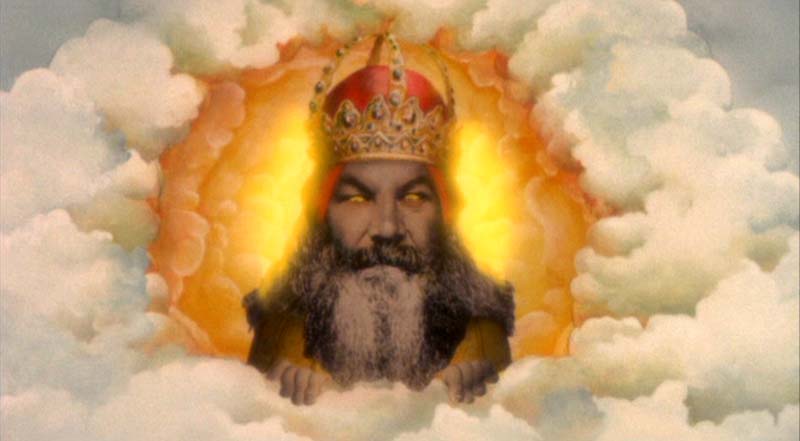
holygrail049

Who is the real asshole in this story?

Why did God create and place a tree in the garden if he did not want Adam to take from it? What purpose did it serve? If you ask me, he set Adam up to fall, but why?

When people ask me what I want to teach, my first answer is always “Shakespeare as literature” but I also want to teach a class on good vs. evil. To quote the rock group Alice in Chains, “What you think you may know, what you think you’ve learned”. This will be the first story we talk about.
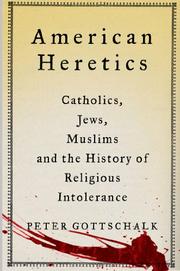


Blaming everything but religion on religious intolerance.

9781137278296Peter Gottschalk

American Heretics

2013 MacMillan Press

The comic Robin Williams once asked, “How uptight do you have to be in order for the British to tell you to get the fu*ck out?” He was talking about the Puritans and the beginning of American history. It may not be an accurate account of how things went down between the British government and this young Protestant break away religious group but the point is taken. This was a very uptight religious group, prosecuted for their fanatical ways.

It is ironic that this small prosecuted group of religious extremists, once settled in the new world, would then turn around and prosecute those with conflicting religious beliefs.

Academics have been struggling with the contracting ideas of America as the home of the free and its insistence that it is primarily a Christian nation. We are free to believe, but in order to make it America, we better believe in standard Christian dogma.

I bet if we counted them all up, we’d find hundreds books devoted to our history of religious intolerance.  Since 9/11 it seems you can’t walk into any bookstore without tripping over the latest theory on why we are so intolerant and what this has done to us as a nation. I’ve read a few. These authors have something to teach us, whether it is a plea for tolerance or a history lesson on religions clashes in America.

The better ones are by authors who write as an attempt to hold a mirror to our society. If they makes us squirm it is only because we find ourselves thinking a long the same lines as those we read about. We may feel discomfort in our ability to identify with one type of intolerance or another. The job of these authors is to make us rethink our views.

Professor Peter Gottschalk, of Wesleyan is not one of these authors. His book American Heretics Catholics Jews Muslims and the history of religious intolerance made me squirm because his idea(s) about who exactly is intolerant is questionable. I cannot for the life of me figure out what his agenda is, other than to be a published author. If I were his professor and he turned in any of these chapters as an essay, I’d question his ability to clearly define his point and ask if he may not in fact be showing signs of intolerance.

In his chapter titled, “Fanatics: Secular fears and Mormon political candidates from Joseph Smith Jr. to Mitt Romney”, Gottschalk offers a far too long view that the Mormon history is fraught with political intolerance; that, due to no fault of their own, Mormons have had a hard time in American politics. Oh yeah, like Smith didn’t invite trouble everywhere he went.  While it is true, Romney’s religion was talked about ad nauseam, it did not stop him from being on the Republican ticket. A point Gottschalk concedes: “None of these issues (what it means to be Mormon) played a significant role in the 2012 campaign.” So why did write this chapter Professor? What was your point? It would have made much more sense to have a chapter devoted to the struggles of religious minority candidates and include Kennedy and ever other religious political first. Gottschalk spends so much time on Mormonism and politics readers may wonder if this is an argument for Romney 2016.

My least favorite of his chapters is titled, “It’s not a religion, it’s a cult: The Branch Davidians”. Here Gottschalk does offer some interesting ideas on the word cult and its modern connotation: “The label ‘cults’ suggests that the application of the word says more about those who apply it than those it purportedly describes”. His point is well taken. Too often we label a religion that we do not understand or feel comfortable with as a cult. Gottschalk then goes into the long history of the Branch Davidians and gives a blow by blow account of the disastrous siege of the Davidian compound by the U.S. government in order to convince readers that the government’s intolerance of cults led to the death of innocent people. While I do not disagree the government used unnecessary force, Gottschalk never considers why they did. Gottschalk failed to consider that the government  may have had Jones Town and Rajneesh (Antelope Oregon) in mind when they decided to take action.

What bothered me the most was Gottschalk’s link to the disaster of Waco and the Oklahoma bombing. He says, “..the disaster at Waco represents an imperious government’s massacre of those asserting their rights of religious expression and gun ownership”. He then goes on to talk about Timothy McVeigh and how this massacre led him to bomb a government building. It does not occur to Gottschalk to explore the possibility that it is the fanatic who calls himself a Christian, yet demands to be armed to the teeth, that is the problem. I don’t know about you, but I don’t think it is Christ who said, “You can have my gun when you pry it from my dead cold hand”. If I remember right, he said, “love your neighbor, turn the other cheek and the meek shall inherit the earth”.  Timothy McVeigh was a very angry young man that was looking for any reason to get back at the government he thought had wronged him. If Waco had not happened something else would have set him off. It would have served Gottschalk better had he noted that religious fanatics and weapons are never a good mix.

Some of Gottschalk’s chapters do offer historical accounts of religious intolerance yet he fails to look deeply at the root causes of these cases. He fails to show his readers the reasons Muslim extremists hate the western culture or how some Christian leaders pushed an ant-Muslim view on their followers after 9/11. This is the heart of the problem with Gottschalk’s book. He blames everything but religion on religious intolerance.


Amazing Waste

Repurposing Food and Reducing Waste

measurestillformeasure

Shakespeare, Classics, Theatre, Thoughts

Nerd Cactus

Quirky Intellect for the Discerning Nerd

Sillyverse

Stories of magic and mystery

Commonplace Fun Facts

Mind-Blowing Facts You Didn’t Know

Fictionophile

Fiction reviews, Bookblogger, Fiction book reviews, books, crime fiction, author interviews, mystery series, cover, love, bookish thoughts...

Patrick W. Marsh

monsters, monsters, everywhere

Shakespeare for Kids Books

Opening the door for kids to love Shakespeare and the classics

desperatelyseekingcymbeline

The 10-year Shakespeare New Year Resolution

Katzenworld

Welcome to the world of cats!

booksandopinions.com

The Book Reviews You Can Trust!

The Book Review Directory

For Readers and Writers

thelitcritguy

screams from the void

Author Adrienne Morris

Step Into the Past—Lose Yourself in the Story.

crafty theatre

ideas inspired by crafty characters

Critical Dispatches

Reports from my somewhat unusual life

The Nerd Nebula

The Nucleus of the Universe for all Nerd Hacks!