

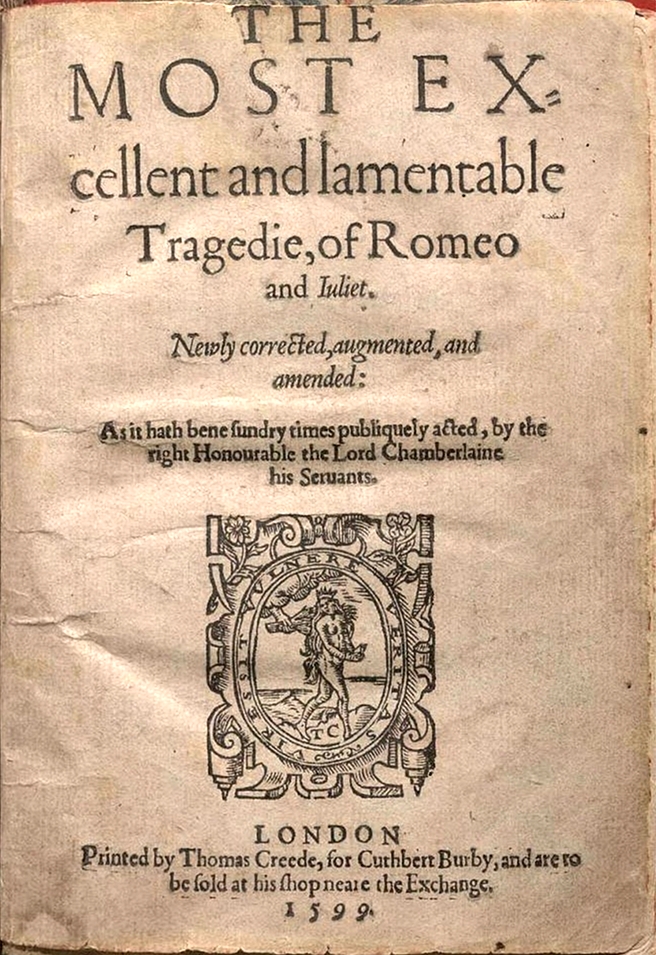
 If it wasn’t for Shakespeare we wouldn’t alternatively celebrate and make fun of teen angst. Shakespeare dared to show the danger of young lust in his play Romeo and Juliet. Romeo and Juliet have become emblematic of young lovers and doomed love. Against all odds Romeo and Juliet fall in love with tragic consequences. With disapproving parents (what do they know!) and social norms standing between them, the young lover show the world what “true love” can overcome. Yet, their love is what leads to their downfall.
Critics argue over whether Shakespeare is showing young folly or whether he is demonstrating the power of love over political fractions. Are we doomed to fate because who we are, or are we doomed to follow our passion, even at our own peril? Are we better off following the rules or following our hearts?
Many critics see this play as a look at the flip side of male aggression and see Romeo’s love for Juliet as a sickness. When we first meet him, Romeo pines for Rosaline a woman who does not share his feelings. Romeo’s relationship with Rosaline is passive. He never speaks to her or takes any decisive action to woo his lady love. He spends his time in anguish, wavering between simplistic adulation and utter despair. Furthermore, Romeo spends a great deal of time in limbo, mooning over a woman who does not reciprocate his feelings. Despite Benvolio’s urging, the lovesick teen will not move on or consider the merits of other women.
Romeo follows Rosaline to a party hosted by the Capulet family, sworn enemies to his own. However, while there, he sulks moodily and refuses to partake in the festivities. He isolates himself from the merrymaking both socially and physically in his refusal to dance and banter with Mercutio. Romeo spends his time, not pursuing Rosaline, but despairing: “Under Love’s heavy burden I do sink.
Despite Romeo’s great declarations of love for Rosaline, his feelings are actually fickle, as shown by his behavior when he spies young Juliet. He is smitten at first sight, saying, “Beauty too rich for use, for earth too dear!” (I, ). This is in sharp contrast to how he speaks of Rosaline. Rather than objectifying Juliet as he does with Rosaline, he holds Juliet in awe, “Did my heart love till now? For swear it, sight!/ For I ne’er saw true beauty till this night (I, ). With this, Rosaline is forgotten and Juliet becomes Romeo’s target.
Unlike how he acts towards Rosaline, Romeo actively pursues Juliet right from the start. Upon meeting, he tries to woo her and win a kiss. Despite learning Juliet’s identity as a Capulet Romeo ignores the feud and commits himself to Juliet. When Juliet asks “Art thou not Romeo and Montague?” (II, ii ), Romeo pledges to deny his lineage to be with his new love and says, “My name, dear saint, is hateful to myself/ Because it is an enemy to thee” (II, ii, ). Social norms be damned! Unapproving parents be damned. Realizing that their lust for each other is sincere, Romeo presses Juliet for vows of love, though they have just met. Romeo convinces Juliet their love is true and the two sneak off to marry. Romeo aggressively both woes and pushes Juliet into a hasty relationship. His superficial notions of love drives his actions once he meets Juliet. He must conquer her and in doing so is blinded by passionate rage. His killing of Tybalt shows us Romeo is not yet mature enough to be in such a complicated relationship. His love sickness the the driving force behind his aggressive behavior.
That the two lovers are convinced they cannot live without the other is yet another sign that these two are not yet ready to experience a complex relationship. As grownups we role our eyes as we watch as Romeo holds his “dead” wife
For fear of that, I still will stay with thee, And never from this palace of dim night Depart again. Here, here will I remain With worms that are thy chamber maids. Oh, here Will I set up my everlasting rest, And shake the yoke of inauspicious stars From this world-wearied flesh. Eyes, look your last. Arms, take your last embrace. And, lips, O you The doors of breath, seal with a righteous kiss A dateless bargain to engrossing death. (1115-124)
 The View From Sari's World
You must be logged in to post a comment.