5 books that have influenced my life

I’m back! And I have a list!

neil-gaiman-meme-author-quote

I saw this meme last night and it got me thinking. Now, I don’t know if Gaiman actually said this, as memes are known to be inaccurately quoted but the message is true. What self-professed bibliophile could come up with a short list of 5 of their most beloved books? I certainly can’t. But the message did get me thinking; could we come up with a short list of 5 books that have had the most influence on our lives? Let’s try. To make this challenge even more meaningful, don’t think too hard about this. Pick the 5 that pop immediately into your head. Those that rise in your thoughts first probably have had the greatest impact. Here are mine.

The Nancy Drew series. Now before you call me out as a cheater, hear me out. No one Nancy Drew mystery comes to mind. It is the series and how it influenced my behavior that stands out. The Nancy Drew series was not my introduction into literature (that would be Goldilocks and the Three Bears) but it was the gateway to my reading addiction. Between the ages of 10 and 14 I would rather read a ND then watch TV. To this day, I prefer books to any other hobby or habit.

Two of my friends and I decided to become the neighborhood detectives. We combed the streets looking for a good mystery to solve. Many a Saturday afternoon was spent peering into back yards and around the small industrial shops that surround our urban houses. We were the first to figure out that the old MacDonald” sisters” were not sisters at all. Surely no two sisters held hands and kissed as they sat sipping tea in their backyard. Mr. Cinnomini liked to sneak flowers to Miss Clarks porch; he was married she was not. While we never did find a mystery worth solving for money, we did exercise our minds and bodies while we looked for clues. The most important lesson I learned from ND was that even young girls could be independent and smart.

Macbeth. I think I have talked about my early introduction to Shakespeare before, so forgive me if I am repeating myself. In my senior year of high school our English instructor took a leave of absence. The school’s only other English teacher was generous enough to take on our class. He was teaching Shakespeare in his class, so it made sense to do the same in ours. This was at a time when I found myself at a cross-road. My peers were pulling me in two directions. I could let the less desirable of my friends influence my behavior or I could spend more time with my studious friends and get serious about college. The damage that Lady Macbeth inflicted on her mind woke me up. Her famous, “Out damn spot” speech hit a nerve. I credit Mr. Foster’s acting while reading the lines for my final decision. To this day, I strive to make damn sure I never do anything that I would regret to the point to permanently stain my mind and soul. Guess which of my peers won.

The Divine Comedy. My introduction to the humanities was Dante’s classic work. My humanities professor, Mr. Hobart was obsessed with the poem and spent an entire semester teaching its meaning to us wide-eyed college freshmen. I too learned to love the poem-I have 6 translations- and it influenced my attitude towards classic literature. Even after dropping out of college I felt the pull of Dante and his warning of “you reap what you sow”. It is Dante who turned me once again towards higher education. I wanted to redeem myself and prove that I could be graced with intellect. This is not as snobby as it sounds. I wanted to show myself I was smarter than I gave myself credit. I did not want to abandon the hope that if I worked hard enough, I, like Dante could find my way out of the woods of ignorance and fear.

A Flash of Lightning in the Dark of Night.  For a while I was lost in a dark wood. Even though I was married and had a wonderful child something was not right. Like a lot of people I turned to eastern philosophy in the hopes of correcting my troubles. The Dali Lama has had a huge impact on my life. So much so that it would take a separate blog post to explain. But it is this book of his that really changed my life. He talks a lot about victimhood in this book and how many of us continue to identify with and hold onto old wrongs. This was me and why I felt so damaged. His message was simple yet powerful. If you cannot forgive those that have hurt you, at least forgive yourself for allowing the hurt to continue. Let it go and move on! The only person who makes you feel victimized is you. Once that sunk in, I felt something I had never felt before, control of my life and attitude.

A Brief History of Nearly Everything. Bill Bryson is my hero! Upon returning to college one of my first classes was in natural science. I quickly realized I lacked any scientific knowledge (okay, that’s not true, I was a gardener but had not connected the two until this book). Bryson’s book not only brought me up to speed on science, but allowed me to explore a part of me I didn’t know existed. I learned I love science! After Bryson I read anything and everything from books on quantum mechanics to astrophysics. Had I been younger and not a mother, I would have switched majors and headed to New York to intern at the Natural History museum. As my bio says I have morphed from a spiritual hippie to a science geek. All because of Bill Bryson.

Okay, that’s my list. What’s on yours?

Are you ready for post-apocalyptic fiction?

Apocalyptic fiction is a sub-genre of both dystopian and science-fiction literature. The theme revolves around the complete collapse of society either through war, nuclear attacks, plague or some catastrophic natural disaster.

My interest in apocalyptic fiction stems from two real life experiences along with a morbid fascination with the ways in which people would cope in a post-society world.

I grew up in northern California. One of my favorite places was the small town of Guerneville nestled among towering redwoods and waist high ferns. The Russian River run though the town. So when my best friend, who lived on a hill in Guerneville, asked me to spend a rainy weekend I was thrilled to say yes.

This was when we were young and foolhardy. I was the only one in our group of friends to own a car, so the first thing I did when I got to Maureen’s house was pick her up and head to the local grocery store.  I think she was blabbing on about her latest boyfriend as we walked down the isles. I was only half listening because my attention was on the other shoppers. Something wasn’t right.

Guerneville at the time, was a small town and the only time one saw any store packed with shoppers was during the summer tourist season, Yet, as I looked around I noticed a lot of shoppers and well, they all looked stressed and a little rushed. Many kept looking down at lists and some would stop and talk to other shoppers. I overheard two men talking about candles and flashlights. It was then that I started to consider the amount of rain we were getting and the wind gusts I could hear from the walls of the store. Guerneville had a history of mass flooding but the last flood had been over 20 years. Did we have any reason to worry? I didn’t think so, yet something compelled me to add two jugs of water, a couple of candles and extra potatoes (don’t ask, that’s another story) into the basket.

That night we had a grand time eating fried hamburger and potatoes. Engaging in philosophical debates as only young people can. The rain never stopped but this was to be expected in the land of giant trees and large ferns. The electricity went out around 10pm and the mudslide that destroyed the house farther up the hill hit around midnight.

To make what is fast becoming a long story short, four of us were trapped in Maureen’s house for three days. The river had not only crested over its banks, it flooded the first story of every house that sat within a two-mile radius. The store we had shopped in was flooded up to the third shelf! The main road became the river as water roared through Guerneville. There we sat, four 21 year olds with little food, hardly any water and absolutely no idea how to survive without electricity. Thank goodness it was only a few days.

Six years later my then husband and I built our dream home on a mountain between the Russian River and the Pacific Ocean. It took longer than expected so instead of moving in during the mild month of October, we moved during the stormy month of January. Luckily for my son and I, the last load consisted of a car full of canned goods and bottled water (our well was full of iron rich water, something we would have to deal with later). My husband stayed in the town of Santa Rosa as he worked late and decided not to make the two-hour drive in the dark.  Big mistake. By the next morning the storm of the century had wiped out the only mountain road leading in and out of our small community. My son and I were trapped on the mountain with no electricity. No electricity meant no lights, no working toilets, no refrigerator, no heat. We might as well of been living in the dark ages (at least they had fireplaces). Once again luck was on my side. My sister-in-law also lived on the mountain just down the road. She taught me that gas stoves can be lit by a turn of the knob and a lit match, that with a small bucket of water toilets can be manually flushed. I learned what can and cannot be plugged into a generator and how to run one with its back-end facing away from the house. I learned how camping stoves and propane lamps are very useful, not to bug out, but to bug in. After these two experiences I vowed to learn how to survive without modern conveniences. My fascination with post-apocalyptic literature was born.

The first recognizable apocalyptic novel was Mary Shelly’s, 1826 The Last Man Standing. Yes the women who gave us our first science fiction novel in Frankenstein also gave us our first look at life in a post-apocalyptic world. That is, if you don’t count Noah and the flood, the Book of Revelation, (which I talked about in my last post) and numerous Babylonian and Judaic myths and stories, some of which dealt with the end of the world and of human society. It seems we humans have always had a fascination with societal birth and death cycles, but it was Shelly who ushered in the modern doomsday scenario.

Post-apocalyptic-related works of fiction gained in popularity after World War II, when the possibility of global annihilation by nuclear weapons entered the public consciousness. Once the fear of nuclear attacks died down, disease became the popular theme of this genre. Did you know that we have had more zombie related movies and books since 9/11 than in any other time in history? The fear of contagion and man-made viruses are what grips us now.

Whatever or however it comes, you need to ask yourself, “Am I ready?”

My favorite post-apocalyptic novels.

149267

Stephen King’s The Stand.

The Stand has it all. A classic divide between hero and villain, good and evil. This novel is less about the end of the world and more about people finding their true nature. Would you, could you survive if there was nothing left to live for and if so, whose side would you be on?  If nothing else, this book taught me to fear dark roadway tunnels.

into-the-forest-199x300

Jean Hegland, Into the Forest.

Set in northern California (very near where I grew up) Into the Forest speculates about what might happen when our unsustainable civilization finally collapses. What scared me most was that Hegland does not use a disaster, but rather a slow decline in our resources, something no one notices until food shortages became food scarcity. Two sisters try to live as normal as possible on a small farm until the day comes when they realize the natural world is their new home.

Shelley-Last-Man

Mary Shelly, The Last man

The Last Man, is a disillusioned vision of the end of civilization, set in the twenty-first century. The book is a all-encompassing account of war, plague, love, and desolation. What hauntes me about this book is not that there seems to be only one human left, but that it seems as if Shelly were writing her emotional autobiography. While researching for this post, I came across some scholars who hold the same view. Shelly, uses her “last man” to tell us how she feels after losing her family and friends. Knowing this makes the book all that more painful.

76620

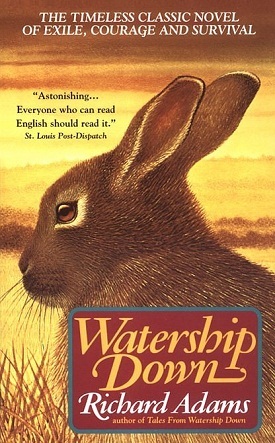
Richard Adams Watership Down

Watership Down uses rabbits instead of humans to show us just how crazy the world can get. This band of rabbits may seem like sweet fuzzy creatures, but when their warren is ruined, they must hit the road to find a new home while facing impossible dangers, relying on their cultural mythology for guidance, and avoiding survivors who seek their destruction. Some continue to be sweet and fuzzy while others act very un-rabbit like. It is creepy because the story is so human.

On-the-Beach-cover2

Nevil Shute, On the Beach.

On the Beach is the story of life after the nuclear apocalypse. As fallout slowly kills the remaining humans on Earth the characters are faced with a dilemma. Not whether to live or die but rather how to die. Should they wait for radiation sickness or commit suicide? Moral dilemma is a common theme in apocalyptic novels and so far this 1957 novel is the best to date when it comes to making us face our fear of death.

since-tomorrow-cover-jpeg

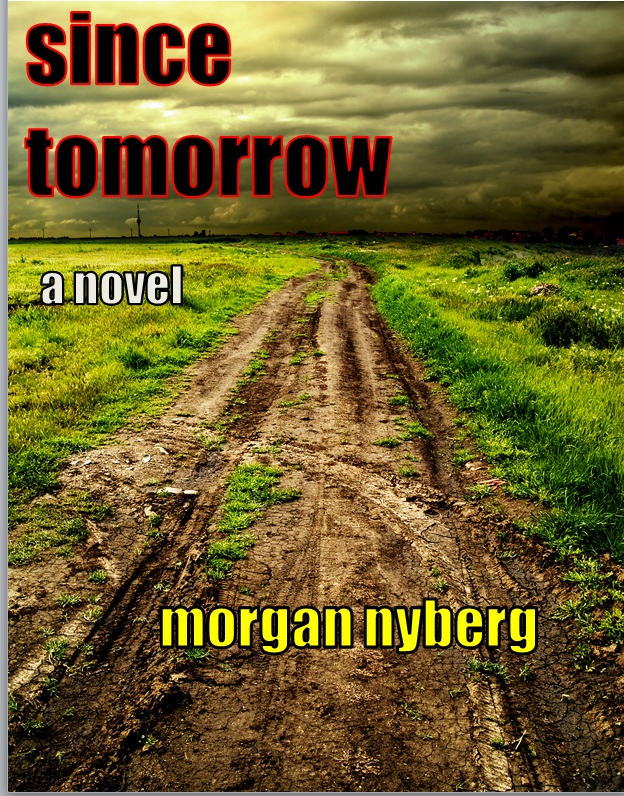
Morgan Nyberg, Since Tomorrow

Set in West Coast of Canada, in which the city of Vancouver has been altered by climate change, pandemic, economic collapse and earthquake into “Town”, a squalid, lawless place inhabited the desperate, the diseased and the dying and where potatoes, yes potatoes, are worth more than gold. This vividly drawn world is so real, so gritty and dirty that after reading it you’ll want a shower and hours of mindless TV. Just be careful not to watch Mad Max.

Amazing Waste

Repurposing Food and Reducing Waste

measurestillformeasure

Shakespeare, Classics, Theatre, Thoughts

Nerd Cactus

Quirky Intellect for the Discerning Nerd

Sillyverse

Stories of magic and mystery

Commonplace Fun Facts

Mind-Blowing Facts You Didn’t Know

Fictionophile

Fiction reviews, Bookblogger, Fiction book reviews, books, crime fiction, author interviews, mystery series, cover, love, bookish thoughts...

Patrick W. Marsh

monsters, monsters, everywhere

Shakespeare for Kids Books

Opening the door for kids to love Shakespeare and the classics

desperatelyseekingcymbeline

The 10-year Shakespeare New Year Resolution

Katzenworld

Welcome to the world of cats!

booksandopinions.com

The Book Reviews You Can Trust!

The Book Review Directory

For Readers and Writers

thelitcritguy

screams from the void

Author Adrienne Morris

Step Into the Past—Lose Yourself in the Story.

crafty theatre

ideas inspired by crafty characters

Critical Dispatches

Reports from my somewhat unusual life

The Nerd Nebula

The Nucleus of the Universe for all Nerd Hacks!