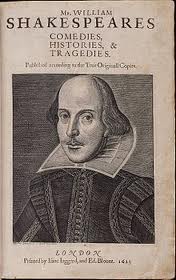
Hamlet: Does he or doesn’t he?

imgHamlet1

Shakespeare purists hate modern adaptations of his plays. I tend to fall into this camp. One of my major pet peeves is the liberal use of scene shifting directors seem to believe is their right. Worse yet is when they cut scenes out all together! Gregory Doran who directed David Tennant in 2009 did both badly, and I have yet to forgive him for it. As did Olivier in 1949. He took a 4-hour play and condensed it down to 2, cutting all mention of Rosencrantz and Guildenstern.

There is a good argument against adaptation. The one that springs to mind is how we modern audiences have come to believe Hamlet may have been more than a little jealous of his stepfather. Thanks to Freud’s view that every son secretly wants to bed his mother, almost every director since Olivier has made Hamlet the Oedipal son.

In the bedroom/sitting room scene between Hamlet and his mother he says to her, “Come, sit you down; you shall not budge”. He never drags her to her bed and rages at her as he straddles her. Yet this is how we usually see it played out.  If you watch the Zeffrelli adaptation like I did (again) last night, be prepared to feel very uncomfortable as Mel Gibson dry humps Glenn Close while he rages. Seriously, I almost stopped the film to take a shower, it felt that dirty.

Yet as much as we purists want to see Shakespeare as he intended it, we have to admit there may be much we can learn about the plays if we let go of our outrage and simply watch what is being presented to us. Often an actor’s interpretation of the character he or she is playing can cause us to reexamine our own interpretation and lead us to look at the plays in new and exciting ways.

Is Hamlet so depressed “he cannot make up his mind to act” as Olivier is so often quoted as saying. Or does he hesitate in killing Claudius because he is not sure the ghost is his father’s spirit as Tennant wondered? Both views seem right and since we do not have Shakespeare’s notes, we will never know, but it is fun watching the different takes on the prince and why it is he comes to such a tragic end. If he could have acted instead of reacted things may have turned out differently.

But interpretation is not the same as adaptation and as I mention before, adaptation changes the original theme of Shakespeare’s plays. Yet as I watched the Zeffrelli film last night an idea came to me. An answer to an question still debated among Shakespeare scholars; “Does Hamlet love Ophelia or not?” There are many examples of his love for her; his letter to her stolen by Polonius, that I think is the most romantic piece of literature, “Doubt thou the stars are fire. Doubt that the sun doth move, doubt truth to be a liar; but never doubt I love”.  His moving speech at her graveside, “I loved Ophelia. Forty thousand brothers could not with all their quantity of love make up my sum”. Yet there are also the fact that he mocks her maidenhood in front of an audience and the famous “get thy to a nunnery” speech in which he tells her he never loved her and accuses her of “wantonness and ignorance”.

So does he or doesn’t he love Ophelia? From my many courses and readings of Shakespeare I have learned two things; Shakespeare never lies. He never has the audience believe one thing only to have the opposite be true. Oh sure, characters lie to each other, but never to the audience. We know who Rosalind is even as she disguises herself, just as we know Iago is not to be trusted even as the other characters call him “honest”. The other thing I have learned is that each sentence is a thought and together these thoughts make up ideas. Shakespeare was the master of one-line thoughts. If we have questions about what is going on in his plays we need to look at each of his sentences to find our answers.

So all of this brings me to an epiphany of sorts; one that came to me as I watched Zeffrelli’s adaptation. He broke the famous nunnery speech in two.  The second part went like this, “What should such fellows as I do crawling between earth and heaven? We are arrant knaves all: believe none of us. Go thy ways to a nunnery. Where is your father”? As Gibson uttered these lines he paused and said softly “believe none of us” and looked at Ophelia with longing and regret. It hit me; this line that so many actors spit out in anger is a separate thought. He is asking her at that very moment not to believe a word he is saying. He does love her and everything he is saying right then is not to be trusted. Unfortunately for Ophelia she does not get his meaning and apparently neither do Shakespearean scholars for nowhere in their arguments can I find any hint that this line stands out. So maybe I am wrong, but I don’t think so. I read the speech again today and cannot find any other reason Hamlet would include this in his hurtful speech. We have to remember Hamlet is aware that Polonius is listening. Hamlet’s back is to the wall. He has to act mad, but not mad with love as to keep the King guessing as to what is going on with him. He must abuse poor Ophelia, but in his abuse is a coded message. A message that, at least for me, answers the question; yes, Hamlet does love Ophelia. The letter came from his heart, as did the graveside speech.

Tell me what you think. Am I on to something here? I ‘d also love to hear about your favorite Shakespeare film. Perhaps there is more to learn from adaptations.
Shakespeare Day! Words! Words! Words!

images-1


Today we celebrate Shakespeare’s birthday. We do this even though historians are not quite sure this is his date of birth. What we do know is that he was baptized on April 26, 1564. Normally newborns were baptized three days after being born. He died on April 23, 1616, so April 23 is dedicated to the Bard.  And what better way to celebrate his work than with lists? Polonius asked Hamlet, “What do you read, my lord? Hamlet replies “Words, words, words. You my dear readers are going to read lists lists lists!

Harold Bloom, the great philosopher and Shakespearean critic, once said, “Shakespeare invented the human”. I would not go so far, but I would say Shakespeare invented how the West looks at the human condition. His characters are mirrors in which we can all look into and see a part of ourselves. Here is a quick list of some of his more famous humans:

Hamlet:

Hamlet has been called the man who could not make up his mind. He is tasked to avenge his father’s death, yet, while having no qualms about killing his traitorous friends, and lashing out with a sword in a murderous rage, he hesitates when it comes to killing Claudius. Hamlet doubts his own existence, and wonders what’s the use of it all? He is hesitant when it comes to suicide. He cannot decide whether this is a good idea; anymore than he can decide if killing Claudius is the right thing to do.

In the end all of his doubts just give Claudius time to plan Hamlet’s death. Every major character dies because Hamlet cannot make up his mind. We may never contemplate such drastic deeds, but how often have opportunities past us by because we cannot make up our minds? Sometimes we feel we have no control over our lives, but it may be that like Hamlet, we hesitate and allow fate to dictate what happens to us.

Lady Macbeth:

Lady Macbeth wants more out of life than a mere drafty castle in a Scottish outpost. She and her husband plot to kill King Duncan and take the crown by force. After the deed is done she quickly regrets her actions. The horror of what they have done seeps into her conscious like the king’s blood seeps onto the floor. “Yet who would have thought the old man to have had so much blood in him”. She begins to sleep walk and tries in vain to wash the blood from her hands. “Out damn spot, out!” She cannot live with what they have done and takes her life. I first read about Lady Macbeth in high school and the two lessons I took from her were:

Be careful of what I wish for. I am not be able to handle it.

Never do anything that will leave a stain on my soul.

Henry V

Henry V is a man of action, but it is his words that we hear (we never see the battle of Agincourt) that compel others to war and love. He talks his troops into war and he talks the French princess into falling in love with him. He is a reminder that words are just as powerful as action and that we should be wary of men with silver tongues. 

images-3

Words Shakespeare gave us.

Shakespeare invented 1700 words.. Shakespeare has been credited for inventing single words that normally would have taken several to mean the same thing. I won’t list them all, but here is partial list of words we use today:

  • auspicious
  • baseless
  • bloody
  • castigate
  • clangor
  • control (noun)
  • countless
  • courtship
  • critic
  • critical
  • dishearten
  • dislocate
  • dwindle
  • eventful
  • exposure
  • fitful
  • frugal
  • generous
  • gloomy
  • gnarled
  • hurry
  • impartial
  • lapse
  • laughable
  • misplaced
  • monumental
  • multitudinous
  • obscene

Some of my favorite Shakespeare quotes:

Brevity is the soul of wit

To thine own self be true

The devil can cite Scripture for his purpose

All the world ‘s a stage, and all the men and women merely players. They have their exits and their entrances; And one man in his time plays many parts

Et tu, Brute

images-2

My personal favorite books on Shakespeare:

Shakespeare, the invention of the Human by Harold Bloom

Shakespeare’s World by DL Johanhak

The Book of William, How Shakespeare’s First Folio Conquered the World by Paul Collins

Shakespeare, the world as a stage, by Bill Bryson

Shakespeare by Michael Woods

A Readers guide to Shakespeare, by Joseph Rosenblum (I have ben lucky enough to learn at this man’s feet. He is a master when it comes to understanding Shakespeare).

And thanks to No Sweat Shakespeare we can end on a list of fun Shakespeare facts:

Shakespeare is the second most quoted writer in the English language – after the various writers of the Bible.

Shakespeare is always referred to as an Elizabethan playwright, but as most of his most popular plays were written after Elizabeth’s death he was actually more of a Jacobean writer. His later plays also show the distinct characteristics of Jacobean drama.

Almost four hundred years after Shakespeare’s death there are 157 million pages referring to him on Google. There are 132 million for God, 2.7 million for Elvis Presley, and coming up on Shakespeare’s heels, George W Bush with 14.7 million.

There are only two Shakespeare plays written entirely in verse: they are Richard II and King John. Many of the plays have half of the text in prose.

Shakespeare’s shortest play, The Comedy of Errors is only a third of the length of his longest, Hamlet, which takes four hours to perform.

All Uranus’ satellites are named after Shakespearean characters.

Among the 80 languages Shakespeare’s works have been translated into, the most obscure must be the constructed language of Star Trek’s Klingon. Hamlet and Much Ado about Nothing have both been translated as part of the Klingon Shakespeare Restoration Project by the Klingon Language Institute.

Happy Shakespeare Day!


Amazing Waste

Repurposing Food and Reducing Waste

measurestillformeasure

Shakespeare, Classics, Theatre, Thoughts

Nerd Cactus

Quirky Intellect for the Discerning Nerd

Sillyverse

Stories of magic and mystery

Commonplace Fun Facts

Mind-Blowing Facts You Didn’t Know

Fictionophile

Fiction reviews, Bookblogger, Fiction book reviews, books, crime fiction, author interviews, mystery series, cover, love, bookish thoughts...

Patrick W. Marsh

monsters, monsters, everywhere

Shakespeare for Kids Books

Opening the door for kids to love Shakespeare and the classics

desperatelyseekingcymbeline

The 10-year Shakespeare New Year Resolution

Katzenworld

Welcome to the world of cats!

booksandopinions.com

The Book Reviews You Can Trust!

The Book Review Directory

For Readers and Writers

thelitcritguy

screams from the void

Author Adrienne Morris

Step Into the Past—Lose Yourself in the Story.

crafty theatre

ideas inspired by crafty characters

Critical Dispatches

Reports from my somewhat unusual life

The Nerd Nebula

The Nucleus of the Universe for all Nerd Hacks!