Post-show wrap ups A case for why we need the Humanities

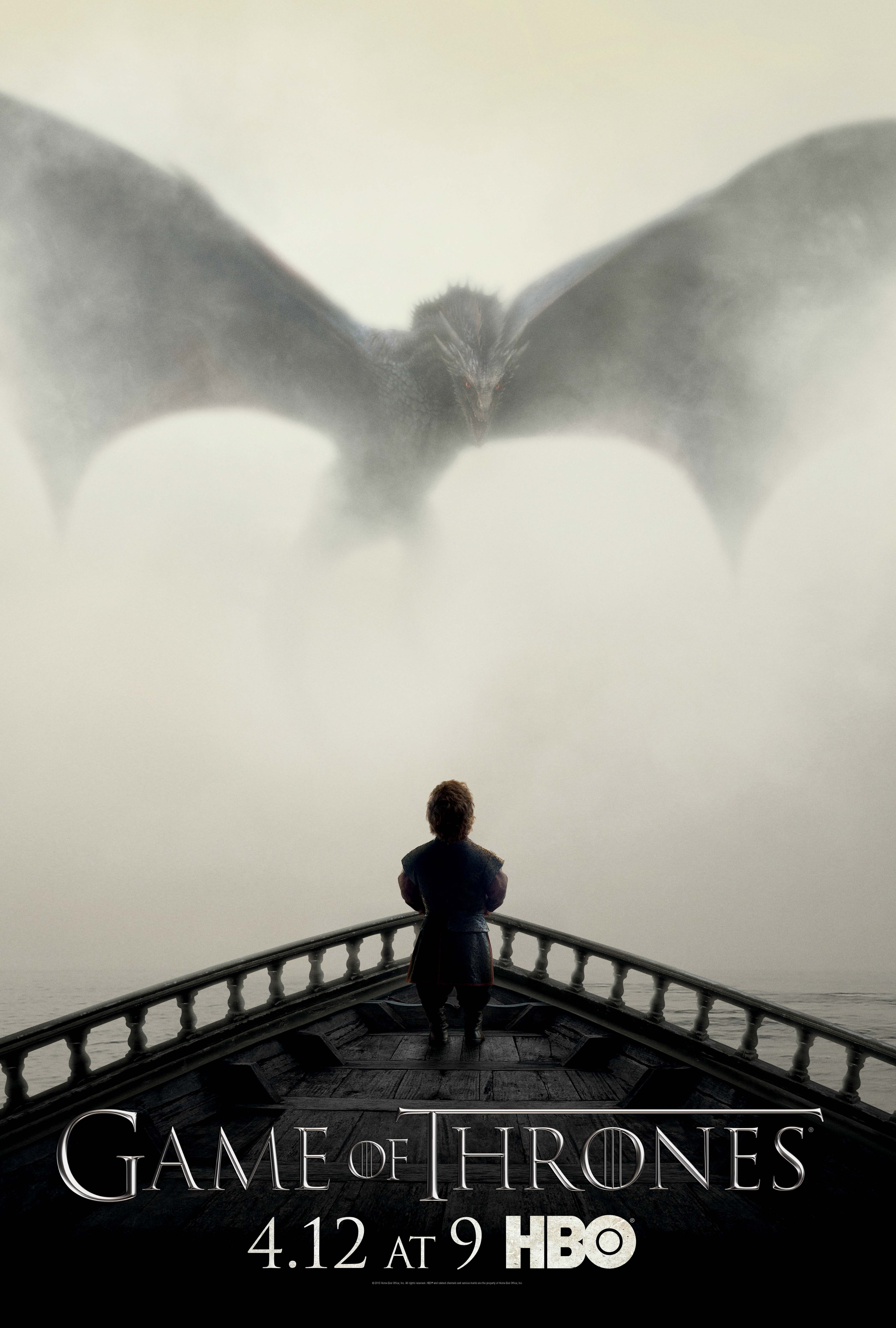
Future dragon trainer?

Last night was the 5th season premier of Game of Thrones. No, don’t worry. This isn’t a recap or review of the show. Nor will there be spoilers. I use this as a reminder as to why we need to keep the study of the Humanities in our classrooms.

Humanities, at least in America, are being pushed aside for more STEM (science, technology, engineering and mathematics) classes .We apparently want our children to learn how to make technological advances, but not ask questions about these advances like, “is this a good thing to do? And, how will it benefit mankind?

The Humanities teaches us critical thinking skills and asks us to search our worldview and ourselves. What does it mean to be human? is a question posed not just by science alone but by the Humanities as well.

A lot of students find these classes boring and whine because they are asked to read and consider the Classics. What they don’t realize is that humanity expresses itself through words, art, drama, architecture, and religious worship. These symbolic gestures form our world. To know what it means to be human is to study and understand these very same symbolic gestures.

Once upon a time (really not that long ago) one of the foundation stones of a college education was acquiring critical thinking skills. This meant that one was not easily swayed by bullshit. A measure of one’s education was knowing when to ask questions and look beyond whatever was being presented. “Does that make sense? Is there more than what meets the eye? How do I know this is true?” Those who mastered these skills were equipped to view the world without the use of cultural and gut-feeling filters. They were able to draw upon their education when faced with symbolic gestures and could easily place them in proper context. Humanities majors made good use of these skills, with many becoming novelists and journalists. These were the people who knew what it meant to be human and could translate world events through storytelling or news reporting.

Today there is a push for specialized fields. My son was a journalist major for three years and never once did he have to take a Humanities course. Rather than focusing on learning why things happen, and then learning to write about it, the focus is on how to get the story out. This is disheartening to me, as the first question should always be, “is this true?”, not, “how do I get my Twitter followers to read my news article?”

We have yet to see the full ramifications of this new breed of journalists, but we are starting to get an idea of how this type of approach can be damning. One has to look no further than the recent Rolling Stone article about a campus rape. The story went viral and caused public outcry as well as damage to the University of Virginia (where the rape allegedly took place). The story started to unravel as more experienced journalists started asking questions. A review into the story led to the conclusion that Rolling Stone failed its readers by not asking the right questions. Most of what the young girl claimed turned out to be false. You can read a great analysis of the review here.

Rolling Stone made a lot of mistakes, and many people are to blame, yet all of them could have been avoided by first, asking one simple question: how do I know this is true?

Another example of this new breed of “journalists” can be found on social media. There is a growing trend of podcasts on YouTube and iTunes that call themselves “After Show wrap ups”. Afterbuzz TV, a very popular collection of these shows says this: “For decades, sports fans have been treated to post-game wrap up shows after watching games. Thanks to AfterBuzz TV, at long last, TV fans can do the same”. What they fail to realize is that sport post-game wrap up shows are hosted by former players and sports journalists who know what in the hell they are talking about. This new breed, not so much.

I like to watch Game of Thrones, but because most of my friends do not I have no one to talk to discuss it with. I decided to download an episode of one of these post-show wrap ups. I thought I would be offered some insight into things that I might have missed as I stared dreamily at Peter Dinklage. What I got instead was a train wreck.

I looked at the bio of the hosts for clues as to their stupidity. I won’t name them, as I do not want to cause them embarrassment. They do this to themselves just by opening their mouths.

Would it surprise you to learn they all claimed to have college degrees? Would it be equally surprising to learn that these are specialized degrees? I doubt one of them took a Humanities course or if they did, slept through it and dreamed about being famous.

It would appear obvious that in order to successfully talk about storytelling, one would have to possess a good understanding of the medium. Since the Game of Thrones is primarily about the human condition, one should have a solid foundation for this too. These hosts do not.

Picture yourself watching a scene in which a very large religious statue is being pulled from atop of a pyramid by an army who had just conquered the city. The statue crashes down in spectacular CGI fashion and breaks a part upon impact. You my dear readers do not need to be told what the breaking of the statue represents. Yet here are the hosts talking about it:

Female Host: “ I don’t get it. Why did they pull the statue down?”


Male Host: “I guess to show them who is in charge?”

WTF? They just watched an army conquer a city and then systemically destroy the religious icons and yet, the female host cannot figure out why. You don’t need a college education to understand the meaning behind this destruction. It’s happening right now in the Middle East, and yet this young woman is clueless. She can no more understand this than she can understand why Daenerys (a young queen with pet dragons) would need Tyrion’s (a politically savvy outcast) help. But sadly, neither do the other hosts. As they talk about this possible alliance one of the hosts says this:

Well, he has read a lot of books. Maybe Tyrion can teach Daenerys how to train her dragons”. I bet he’s read a book about it”. The hosts then go on to discuss the possibility that this is how Tryion comes to help Daenerys. Not by teaching her the game of politics, but how to keep her dragons from eating innocent people. At this point I turned the podcast off. So much for an insightful discussion. Should have just talked to myself as I watched the show. Okay, I would have a least looked at the cat when commenting.

These hosts could have benefited from a few Humanities courses. They would have learned the fine art of storytelling, what symbolic gestures mean, and how politics, not dragon training, is crucial to nation building.

It would be ideal if STEM were to be changed to STEAM. We need the arts, and by arts I mean the Humanities. For without them we wouldn’t know why we do the things we do. Technology might allow us to build better dragons, but Humanities will have us ask: Do we really need them in the first place? I’ll take the guy who’s read a lot of books over the girl with the out of control pet dragons any day.

From Cosmos to Evolution


The Greatest Show on Earth-l

Have any of you been watching the re-boot of Cosmos? I ask, because not many people I know are, and those who are watching have given it a lukewarm response. I have to admit, as much as I admire Neil de Grass Tyson, there is something off about this show. It feels dumbed down and sadly seems to miss many of the finer points Sagan made in the original. I’m going to give it a couple of more episodes before I completely condemn it. I just bought a copy of the original series, so look for an upcoming blog in which I compare the two.
But, I have to admit I am happy to see science education being broadcast on network television. As a country we have to admit we are not as well versed on science as we should be. Late night infomercials wouldn’t be so lucrative if we were.

So to celebrate science education I thought I would bring out an old review I did on Richard Dawkins’ bestseller, The Greatest Show on Earth, the evidence for evolution, for those who have yet to tackle the science behind our origins. This post is my science re-boot.

One advantage to college is that it exposes you to subjects that you otherwise may not touch. For me this is science. In high school I was encouraged to take agriculture as my science requirement because of my poor math skills. Since I lived on my grandparent’s farm during the summer months I laughed that I could take a class doing things I did on a daily basis. Needless to say I aced this “science” class, but my knowledge of general science was woefully lacking. During my early adult years I stayed away from science thinking I was not smart enough to get it. After taking a biology class three years ago, I found not only am I smart enough to get it, I love it and decided to learn all I can. Most of my education has come from reading science books though I have taken three science classes since biology.

Early this summer I decided to learn more about evolution. Sure I had the basics down, but really not enough to hold a good debate with the creationist in my family. Like most people what I “knew” came from what I had heard, not from what I read. Obviously one way to learn more about evolution was to read Darwin himself, but this turned out to be a very dry and boring read I am sorry to say. I looked for a modern guide to evolution; after all we have learned so much since Darwin, surely there had to be someone out there who has written a type of “update” in a engaging and entertaining way. To my surprise this turned out to be Richard Dawkins. Dawkins’ The Greatest Show on Earth, the Evidence for Evolution is a book that I feel Darwin himself would have written if he had all the facts and evidence we have now.

Like many readers I only knew Dawkins from The God Delusion and his famed Spaghetti Monster. I didn’t know Dawkins is a biologist and a rather knowledgeable and engaging one at that. His latest book The Greatest Show on Earth, the evidence for evolution taught me almost everything I need to know about evolution; why and how it works, but more importantly (at least in my mind) it got me asking questions. This is how I gauge if I am truly learning anything, when I ask follow up questions.

The book reads like a course in evolution. Dawkins starts with examples of evolution and mutation by “artificial means”. What we all take for granted but not understand is that artificial means is a type of evolution humans have been engineering since the birth of civilization. Hunter gatherers tribes would not have devolved into agrarian societies without it.
Over thousands of years man has taken the wolf from village scavengers to the many breeds of dogs we see today. A scientist in Russia did the same with foxes in the 1950’s and within just a few short generations had tame foxes. These foxes began to look and act like dogs, from the floppy ears to loyal behavior. Dawkins points to plant breeding; from our early ancestor’s ability to change /adapt wild plants to the grains and cabbages we have today, to the award winning roses we all know and love. Dawkins starts here so the reader becomes comfortable with the idea of evolution and gene mutation.

dogs

The book then moves on to how genes mutate and how DNA works. Those who may not have been exposed to these subjects beforehand can take heart that Dawkins explains this in layman’s terms. Those who have a firm grasp on the subjects can enjoy Dawkins examples of rapid evolution. There is a great story of a biologist who does an experiment on fish to determine how long it would take for them to change their spot patterns when introduced to predators. I won’t spoil it for you, but will say I have some good ammunition f the next round of discussions with my creationist minded aunt.

I will admit the middle of the book dragged a little for me. Here Dawkins goes through the nine months of gestation. Even Dawkins admits this is a little digression, but he did have a point to make. I think he could have made the point in less time. This is my only negative thought on the book; at times Dawkins eloquently explains something but then goes on to spend another page or two explaining what he just said. Either Dawkins does not have confidence in his ability to get a point across or he does not have confidence his reader will fully understand some key points. I found myself skipping some parts because of this.

Over all I would highly recommend this book to anyone who wants a better understanding of evolution or science in general. Trust me, this is no dry science book. Dawkins biting English humor emerges throughout the book. Laughter can sometimes be a great teacher.

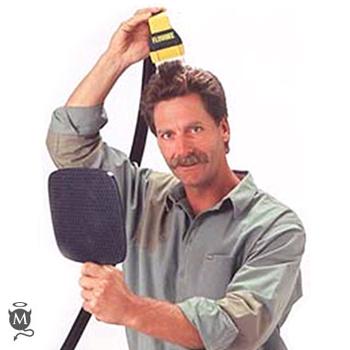
Flobe

I think we all should have a good grasp on science if only to make us better consumers. Many books and late night infomercials rely on our lack of science knowledge in order to sell us cheesy ideas or products. Dawkins may not stop you from purchasing a self-watering glass globe that magically knows when your plants are dry, but I bet you never look at a dog or plant the same way again.

If you have a favorite science book be sure to leave a comment. I am always on the lookout for a good science read.

Amazing Waste

Repurposing Food and Reducing Waste

measurestillformeasure

Shakespeare, Classics, Theatre, Thoughts

Nerd Cactus

Quirky Intellect for the Discerning Nerd

Sillyverse

Stories of magic and mystery

Commonplace Fun Facts

Mind-Blowing Facts You Didn’t Know

Fictionophile

Fiction reviews, Bookblogger, Fiction book reviews, books, crime fiction, author interviews, mystery series, cover, love, bookish thoughts...

Patrick W. Marsh

I write literary horror - poems, short stories, and books

Shakespeare for Kids Books

Opening the door for kids to love Shakespeare and the classics

desperatelyseekingcymbeline

The 10-year Shakespeare New Year Resolution

Katzenworld

Welcome to the world of cats!

booksandopinions.com

The Book Reviews You Can Trust!

The Book Review Directory

For Readers and Writers

thelitcritguy

screams from the void

Author Adrienne Morris

Step Into the Past—Lose Yourself in the Story.

crafty theatre

ideas inspired by crafty characters

Critical Dispatches

Reports from my somewhat unusual life

The Nerd Nebula

The Nucleus of the Universe for all Nerd Hacks!