What ifs about Shakespeare

The Thinker, Shakespeare style

As some of you might know, I am working on notes for my own book about Shakespeare, an introduction to our beloved Bard and how to enjoy the plays. It’s a groundling’s guide to Shakespeare if you will. I do rather like that for a title.

As part of my research (and continuing education) I’m listening to various podcasts as well as reading books and academic papers. Of all of my research, I am finding the podcasts to be most informative. Sometimes I hear things mentioned, usually as an aside, that gets my imagination going. Unfortunately for me, this usually happens at work. I scribble myself a note for later use.

Some of the things I hear starts me down the path of speculation. Oh, if that is true, could this also be true? Of course, we know so little about the man we are left with a lot of holes to fill. Holes we should reserve for our own pleasure, our own entertainment value. Since we cannot prove anything, the path should be narrow and short so that we don’t venture into the wild weeds of conjecture.

I have to admit, musing on Shakespeare’s life is an entertaining intellectual exercise. When I start down the path, I find myself using my knowledge of history and Elizabethan social norms. Of course no intellectual exercise is complete without a little research. As I mentioned, the path is short, and I end up putting my thoughts aside for more useful endeavors. But I thought it would be fun to share some of my ideas as part of Shakespeare Week

I give you three What ifs about Shakespeare

I’ve taken many classes on Shakespeare and in each the subject of his relationship with his wife always comes up. Students, who hear about his gift of the second best bed in his will for the first time, assume this is a dig. They couple this with his move to London as proof that he did not love Anne. It is also assumed that Anne, being older and pregnant when they married, must have tricked him into it. This idea seems to be popular with male scholars too. In Shakespeare’s Wife, Germaine Greer argues that too many scholars paint Anne as a scheming woman who set a trap for poor young will as she is getting on in years (26 is old for women of her day). But what if it was the other way around? What if he talked her a relationship? What if it was Will, not Anne who pursued the relationship? What if he wrote this sonnet for her, as some scholars suggest?

Those lips that Love’s own hand did make,
Breathed forth the sound that said ‘I hate’,
To me that languished for her sake:
But when she saw my woeful state,
Straight in her heart did mercy come,
Chiding that tongue that ever sweet
Was used in giving gentle doom;
And taught it thus anew to greet;
‘I hate’ she altered with an end,
That followed it as gentle day,
Doth follow night, who like a fiend
From heaven to hell is flown away.
‘I hate’, from hate away she threw,
And saved my life, saying ‘not you’.

Scholars believe line’s 13 and 14 seem to be puns on Anne’s name. “hate away’ sounds very close to Hathaway, and “and saved my life” could be a play on “Anne saved my life”. If this were true, then we could say she did not like him at first, yet in the end, she “saved his life” by marrying him. This would offer us a new way of looking at their marriage.

Other scholars have pointed out that Sonnet writing would not come into fashion for another 9 years. This type of poetry was started by Phillip Sydney. But that doesn’t mean we should throw out the idea that Shakespeare wrote this for his wife. Who knows, maybe he wrote as an anniversary present?

Speaking of marriage, did you know young Elizabethan married men couldn’t be apprentices? I learned this from one of the many Shakespeare related podcasts I listen to. Sadly, I failed to note which one. It was an off-handed remark about Shakespeare’s early employment or lack of. I thought, wait a minute. This may tell us something; Shakespeare, having gotten married at 18 would have had difficulty in securing employment. What if this was the reason he left for London? Not because he wanted to get away, having just been through a shotgun wedding, but because his options were limited?

The Tudor “Poor Laws, enacted in 1536, says “male apprentice must be cared for until they reach the age of 21 or marry”. Okay, new path to follow, what if, at 18 Will either hated being an apprentice (he would have started at 14) or was finally being pushed to find employment with a master by his father, chose to get married instead? What would make a man leave his wife and children in the country for the big city? Fame, money? Possibly, or maybe he had no real prospects in the country. Or maybe he did want to get way from Anne….

He’s starting to sound like a jerk. Perhaps we should leave this path all together.

Speaking of sounding like a jerk…

One of the most talked about holes in Shakespeare’s life is the explanation for why he only left Anne the “second best bed” in his will. This has been debated ever since the will was found in 1747. Scholars, historians, and critics of Shakespeare have argued over the reason for this gift. Bonner Miller Cutting sifts through them all in his essay, Alas, Poor Anne: Shakespeare’s Second-Best Bed” in Historical Perspective. He argues that given what we know about Elizabethan wills and marriage laws, this was a deliberate dig by Shakespeare. He left his estates to his daughter Susanne and her husband John. Cuttings asks, “if Shakespeare wanted to ensure his wife was well cared for but not given the best of things, why not the second best house”? It is a fair question.

The question surrounding the “second best bed” has intrigued me for a long time. It is not something I think about a lot but once in while the question pops into my head. It wasn’t until I heard an episode of the History Extra podcast did I give it any serious thought.

The episode talked about the changes in childbirth; from medieval times to the present day. It was noted that during the Elizabethan era births were moved from the marriage bed to a birthing/sick bed. As houses became bigger, rooms were given over to the infirm. Women were advised to stay in bed for three day after giving birth in order to regain their health. What, if this second best bed was the birthing bed? What if, instead of being a dig at his wife, Shakespeare gave her the bed as a token of his appreciation for her as a wife and mother?

This is all speculation of course, but it does make our favorite playwright less of a jerk and more to our liking. And isn’t that the point? We speculate about Shakespeare’s life and fill in the holes as we see fit. We want him to be perfect, just as we view his work to be. But, in reality, he was human, and as such was complicated. What we really need to do is appreciate the work, and forgive his flaws.

Bonner Miller Cutting, “Alas poor Anne”

William Shakespeare, Sonnet 145

Joseph Tanner, “Tudor Constitutional Laws”
Can we still enjoy Much Ado About Nothing?

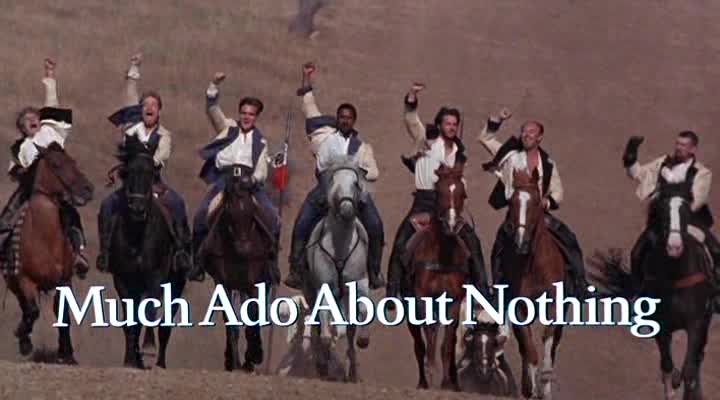
branagh-03

I haven’t watched Kenneth Branagh’s adaptation of Much Ado about Nothing since it’s 1993 release. I completely forgot how delightful the movie and the play truly are. This in part thanks to some modern scholars and theater directors.

I reread the play last month as part of a Future Learn class, but because I do not buy into the scholarly idea that this is a problem play, I didn’t get much out of the class. It seems to me modern scholars make much ado about nothing. Or at least, much ado about something we needed not think so hard on. When we chose to use our modern sensibilities as guides to inform us about a pre-modern plays with there will always be problems. But if we bother to look at this play from an Elizabethan audience perspective we find there is no problem.

My goal here is not to overly criticize modern scholars and directors as some of their points are valid; the role of women as objects is a worthy subject. But, when Shakespeare’s plays are placed under a microscope, scholars lose the big picture. Shakespeare understood the subject matter he addresses it in the play. Critics don’t like his solution and therefor tend to ignore it. This does a disservice to the play. Modern theater companies tend to make it darker than it need be. We need only to compare the Royal Shakespeare Theater’s 2013 production to the Branagh film to see how modern attitudes can affect the likability of the play.

In order to understand why Branagh’s film is a breath of fresh air and a film worthy of praise, we need to understand the subject matter Shakespeare addresses and his understated answer or his “moral of the story”, if you will. There is a lot to unpack but for discussion sake, I will keep it brief.

Here come the spoilers!

In a nutshell, Much Ado about Nothing is a play about two sets of lovers and the fragility of love and courtship. It is possibly the most socially realistic of his plays in its portrait of class difference and community life. The pain is contrasted and constraint by joy. As in all of Shakespeare’s comedies this play’s misunderstanding are sorted out and ends with a wedding scene.

Don Pedro (a prince of Aragon) accompanied by a band of soldiers, travels to the small town of Messina. It is mentioned that Pedro has an uncle in Messina but we never see him. It is the governor, Leonato, that Pedro decides to stay with. The soldier Claudio (a lord of Florence) instantly falls in love with Leonato’s daughter Hero. Hero’s cousin Beatrice and Benedick, another soldier, have an antagonistic relationship, one that was cemented before the soldiers return from an unnamed war. Upon Benedick’s return the two once begin trading barbs. It is obvious to all that that these two are in love, yet neither will admit it. It will take light-hearted subterfuge to get them together.

Claudio and Hero have no such problems confessing their love. When Claudio tells Pedro he wants to marry Hero, a quick (yet unnecessary) plot is hatched to woo and win her hand. The comedy turns dark when Pedro’s illegitimate brother, Don John, decides to interfere. His companion, Borachio (Italian for “drunkard”) devises a plan in which John convinces Claudio and Pedro to watch as “Hero” and Borachio have sex the night before the wedding. Claudio, enraged, publically shames Hero at the alter and throws her back at her father calling her a whore. Hero “dies” at the alter and is buried in a shroud of shame. When John’s devious plot is revealed, Claudio begs Leonato to punish him as he sees fit, believing he has killed the woman he loved. Leonato tells Claudio he must publicly admit his guilt and then marry his niece; a lady Claudio cannot meet or see until after he marries her. Claudio agrees to the terms. As it turns out, Leonato’s niece is really Hero, who has been in hiding waiting for the truth of her virtue to come out. That she agrees to marry the man who publicly shamed her is the modern scholars problem.

Elizabethans on the other hand, would have been very familiar with this plot. Shakespeare did not make it up out of whole cloth. Sexual slander was a theme sixteen-century theater audiences were quite familiar with. Aristo’s Orland Furiouso and Juan Martorell’s Tirant lo Blanco are two earlier works so similar to Shakespeare’s that we can safely assume he drew upon them. Seventeen-century playwrights would also use this theme as a way of satirizing English sensibilities. Cecil Sheridan’s A School for Scandal comes to mind.

That Hero agrees to marry Claudio may be disagreeable, but it shouldn’t shock us. In reality she has little choice in the matter, as it is her father that decides the wedding will take place. When the idea of her “death’ at the alter is voiced by the priest, it is her father, not Hero who agrees. It is her father who decides Claudio will marry her, even if it takes trickery to seal the deal. Hero has little to say about the matter as her voice is silenced by the pre-modern patriarchal society she lives in. This is the setting of the play, not modern England where woman are allowed to chose and reject their suitors.

Shakespeare knew fully well what he was writing. He could have easily kept the story a tragedy as it was in earlier plays. Instead, he couples it with humor by the pairing of Beatrice and Benedick. On the outset it seems these two couples are opposite but closer inspection shows us they are not. Beatrice and Benedick use words to hurt each other in order to avoid personal pain. They seem to be afraid of each other. It is only after overhearing conversations in which each thinks the other is in love, that they come together. Hero is easily wooed by Pedro’s words about Claudio yet Claudio, in his self-doubt, is easily blinded by John’s.

Shakespeare is telling us that in this time and place what people and society think are important (when isn’t it?). So important that Hero “dies” when she is called a whore, and resurrects when her honor is restored. Shakespeare knows Claudio is a flawed character and why he is flawed. His solution is to allows Claudio some redemption by way of punishment. Claudio must agree to marry a woman whose reputation and face is unknown. His station in life in part depends on whom he marries; yet he is willing submit to whatever fate has in store for him. He honors Leonato by his willingness to forgo social constraints. In doing so he finally achieves a measure of honor.

Many modern directors make Claudio so unlikable that there is little impact to this last scene. Audiences are so uncomfortable with the play’s progression that the unfortunate actor playing Claudio is painted into a corner. He can only hope his punishment fits the crime. I’ve seen one play that has the actor so vile that his acquiescence is little more than lip service. I pictured him dumping his veiled wife as soon as no one was looking. From all of this you might think this is one of Shakespeare’s least liked plays. It is not. This is one of the few plays that has never gone out of theatrical style.

Which brings us back to Branagh. As I reread and studied the play, it occurred to me that my memory of the movie in no way matched the ideas that were being presented to me as of late. I had to wonder if I had missed something in my introduction to the play? Is is possible to still enjoy the play?

This is a must see movie for so many reasons! One does not have to admire Shakespeare to fall in love with this adaptation. Between the setting and the acting there is much ado about this film.

Branagh sets his film in the lush hills of Tuscany. One can watch this a second time for the cinematography alone.

Branagh plays Benedick with the wonderful Emma Thompson as Beatrice. At the time, these two were in love and their passion for each other jumps off the screen. Some scholars suggest Beatrice and Benedick would end up having a doomed relationship, as their barbs would make it impossible for them to respect and love each other. Branagh and Thompson prove that it’s there hidden meaning, not the words alone that cement this marriage. It’s in thanks to Shakespeare that whenever modern fictionalized bickering male/female characters are first introduced we automatically know they will end up together. Branagh reminds us why we love this plot device.

Denzel Washington plays a very convincing Don Pedro. He range of mood: authoritative, compassionate, and contrition works. Keanu Reeves on the other hand only has one mood; that of a brooding malcontent. His character is so one-dimensional that it borders on the absurd. This is the only flaw I can find in the movie.

Michael Keaton more than makes up for Reeves’ wooden performance. Keaton is tasked with playing Dogberry, a beloved comical character who is not always easy to play. I’ve heard people complain that Keaton goes overboard with his representation but they forget he is introduced as the play switches from comedy to tragedy. Dogberry is inserted into the play as a reminder to the audience that this is still a comedy. Keaton’s Dogberry arrives on horseback in Monty Pythonesque style (that is, there is no horse). It is so out of left field that I laughed out loud, and for a moment forgot I was about to see the tragedy of Hero. Well played, sir, well played.

Robert Sean Leonard has the task of making us both like and dislike Claudio. I am not sure what his intent was but he managed to be dull, both as a potential lover and scorned groom. This actually worked in his favor, as Claudio is supposed to be malleable. Make him too likeable and his actions at the alter come across as false. Make him too distasteful and Hero’s affection for him, equal as false. Leonard comes across as a young man on the edge of manhood who is easily swayed by those around him.

The humor involves subtle slapstick. Watching Benedick as he tries to unfold a lawn chair while eavesdropping on a conversation reminds us just how funny Branagh can be.

Everyone is this film is a pleasure to watch. Branagh has a gift for surrounding himself with talented people, and is the kind of director who allows their talents to shine. The movie is just plain fun. It is a feel good movie that makes us realize why we still love Shakespeare.

If you’ve never watched a movie based on one of Shakespeare’s plays, start with this one. It may be one of the best.

I’d love to hear which is your favorite.

Amazing Waste

Repurposing Food and Reducing Waste

measurestillformeasure

Shakespeare, Classics, Theatre, Thoughts

Nerd Cactus

Quirky Intellect for the Discerning Nerd

Sillyverse

Stories of magic and mystery

Commonplace Fun Facts

Mind-Blowing Facts You Didn’t Know

Fictionophile

Fiction reviews, Bookblogger, Fiction book reviews, books, crime fiction, author interviews, mystery series, cover, love, bookish thoughts...

Patrick W. Marsh

I write literary horror - poems, short stories, and books

Shakespeare for Kids Books

Opening the door for kids to love Shakespeare and the classics

desperatelyseekingcymbeline

The 10-year Shakespeare New Year Resolution

Katzenworld

Welcome to the world of cats!

booksandopinions.com

The Book Reviews You Can Trust!

The Book Review Directory

For Readers and Writers

thelitcritguy

screams from the void

Author Adrienne Morris

Step Into the Past—Lose Yourself in the Story.

crafty theatre

ideas inspired by crafty characters

Critical Dispatches

Reports from my somewhat unusual life

The Nerd Nebula

The Nucleus of the Universe for all Nerd Hacks!