The Once and Future List

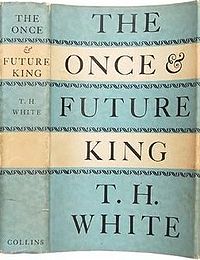
200px-Once_future_king_cover

Yesterday marked the 75th anniversary of the publication of T. H. White’s The Sword in the Stone. It was the first in a series of books that would eventual be one, titled The Once and Future King. It is one of my all time favorite books. To celebrate I thought I would offer my readers a short list of:

 Things you may not know about The Once and Future King.

The four books, published over three decades are titled:

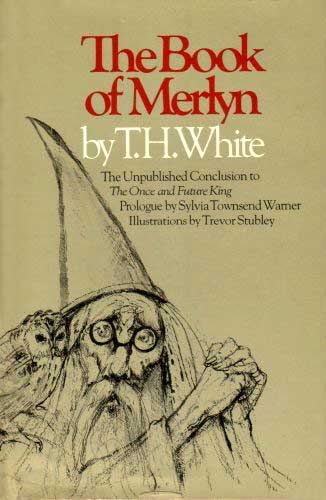
The Sword in the Stone, The Queen of Air and Darkness, The Ill-made Knight, and The Candle in the Wind. A fifth book, The Book of Merlin was excluded from the compilation. I have a copy of it, and have to admit it is not as good as the first four.
Sword7


Tone:

The books start out lighthearted and very funny. As the story progress the tone becomes dark and somber. White said this is how life works; we enjoy our adolescence and innocence and gradually become jaded and disillusioned

Movies based on the book:

The Sword in the Stone was made into an animated version by Disney in 1963 and the  musical “Camelot” is based on the The Ill-made Knight and The Candle in the Wind

The reason for Arthur’s nickname of Wart:

White says Wart was his nickname because it rhymed somewhat with Art, which was short for his name. He is not called Arthur until the very end of The Sword in the Stone. Even Merlin calls him Arthur after he becomes king. White chose a nickname to divide the personalities of the boy and that of the King.

Is Merlin the original Benjamin Button?

Merlin lives through time backwards, making him a bumbling yet wise old man who is getting younger.

What the hell is up with Lancelot’s looks?

In all other romantic Arthurian tales, Lancelot is always portrayed as the best looking, strongest, and bravest of all the knights. White describes him as “ugly as an African ape. His Lancelot is insecure, and self-loathing. He sleeps with Arthur’s wife, and carries his sin on the outside and inside. He seeks to overcome his flaws through full devotion towards becoming Arthur’s greatest knight.

qg%26lancelot


Why the Questing Beast?

The Questing Beast represents the absurdity of knightly quests and serves as White’s way to belittle the notion of the quest as the route to knightly glory. King Pellinore never catches the beast, as this would be end of his knightly purpose.

questing-beast+3

But why should I read yet another book about King Arthur?

White based his books on Sir Thomas Malory’s tales, yet he is more Monty Python than French poet. Here is a conversation between the noble Knight Sir Grummore Grummursum and Arthur’s “uncle” Sir Ector:

Sir Ector said, “Had a good quest today?”
Sir Grummore said, “Oh, not so bad. Rattlin’ good day, in fact. Found a chap called Sir Bruce Saunce Pite choppin’ off a maiden’s head in Weedon Bushes, ran him to Mixbury Plantation in the Bicester, where he doubled back, and lost him in Wicken Wood. Must have been a good twenty-five miles as he ran.”

Merlin to a very depressed Wart:

The best thing for being sad,” replied Merlin, beginning to puff and blow, “is to learn something. That’s the only thing that never fails. You may grow old and trembling in your anatomies, you may lie awake at night listening to the disorder of your veins, you may miss your only love, you may see the world about you devastated by evil lunatics, or know your honour trampled in the sewers of baser minds. There is only one thing for it then — to learn. Learn why the world wags and what wags it. That is the only thing, which the mind can never exhaust, never alienate, never be tortured by, never fear or distrust, and never dream of regretting. Learning is the only thing for you. Look what a lot of things there are to learn.”

White’s book appeals to young and old alike. Reading it as a child delighted me and made me laugh out loud. No book ever came close to charming me the way White’s did. As an adult I still laughed but found meaning in Arthur’s courtly drama. I’ve read the book three times and afterwards have a hard time picking up another book. There will never be another King Arthur and there will never be another T H White.
The Great Mortality: Things you did not know about the Black Death

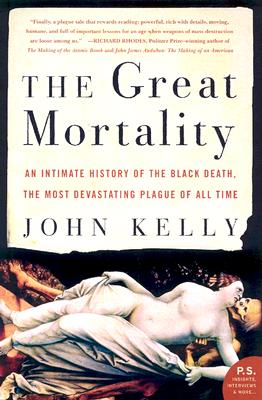
GreatMortality-1

Another history book off my To Be Read shelf! Trust me, this was no easy task. In between Poe, Doyle and Christie, not to mention an essay comparing early fictional detectives, I managed to no only read John Kelly’s amazing “The Great Mortality”, I managed to enjoy it, reading long into the night.

The Great Mortality stands out among the plethora of books on the killer plague of 1347-1350. Kelly’ research into the lives of those living through this nightmare it is a testament to late Medieval European society. The book is a look at the plague, not from a modern perspective, but from contemporary reports, journals and tax records. Readers hear from those who lived through what they called “The Great Morality”. If reading about death by bacteria, isn’t bad enough, Kelly shows us just how awful people could be to other people. He never judges, just shows us reports of Christians killing Jews, and Muslims ignoring victims.

The book begins with a lesson on how the plague may have started and ends talking about the debate between scientists who believe the illness was a mutated form of Yersinia Pestis, a bacteria found in certain rat fleas and the “Plague Deniers” who think it was a highly contagious virus. Whatever the cause, we know now it wiped out 2/3 of Europe’s population, and in some small pockets, 60% to 90%.

I made several notes as I read that I thought I would share with you. I call this list:

Things you may have not known about The Great Mortality

bridgeoflife

Venice’s death rate was around 600 a day, so the city implemented a program that saw to it, that no dead body be allowed to stay in the city. There was a daily shuttle of boats up and down the canals gathering the dead to be taken to a San Giorgio Island. Venice put a halt to normal burial rituals. No one was allowed to lie out a loved one for last goodbyes.  This did not lesson the mortality rate, but it did cut down on secondary infection from too many dead and not enough cemetery space that so many other cities were facing. The forcefulness of the Venetian response and the ability of the city to continue to operate is something the US Energy Commission looks to when calculating a response to a thermonuclear war.

Plague pits may seem horrible to us, but for medieval society it was the worse possible burial imaginable. The idea of a personal death is a product of the European Middle Ages. Death was a time to take stock of ones life and prepare for heaven. The pits were the antithesis of this idea. It made death anonymous, animal like and in the medieval mind, unrecognizable for future resurrection. How could Jesus find you if you were in a pit, possibly surrounded by sinners?

The plague was unusually well documented in Florence. Because of the vast amount of information we have, it has been calculated that the disease traveled 2.5 miles a day. Other plagues took months to travel the same distance. Imagine if this happened today. Between cars and air travel we would never see it coming!

With cemeteries filling up within weeks, what did Avignon do with their dead? Float them down streams and rivers until they came to the Mediterranean Sea. After reading this, I am not sure I want to eat fish again.

Did they mourn their dead? Of course! The Italian Poet Petrarch wrote this poem about his lost love Laura:

She closed her eyes: and in the sweet slumber lying

her spirit tiptoed from its lodging place

It’s folly to shrink in fear, if this is dying

for death looked love in her face.

images

Medieval doctors were at a loss as how to deal with the plague. Yet one Muslim doctor, Ibn al-Khatib held some ideas that are very modern. He stood his ground when it came to contagion and how to stop it. Sadly, the Muslim religious leaders believed it was God’s plan that so many should die (much like the Christian clerics). The Muslim religious leaders did not want to do anything; they felt it was up to God to determine who would live and who would die. Khatib was killed for his ideas.

black_death

Yes, the living did notice the dead. One report talks of “stepping back into doorways to give the death carts passage”. The streets were full of dead bodies (both man and beast). The filthy streets and overwhelming stench meant that no one could ignore the horrors around them, even for a minute. It must have been hell on earth!

danse-macabre-empress1

The plague gave us the most bizarre artwork ever seen. Danse Macabre or Dance of Death originated in France in the early 1400s as a reminder that death takes everyone, regardless of age of status. Many people must have felt this reminder was necessary as it quickly spread through out Europe and can found on everything from Frescoes to woodcuts.

There is so much more to learn from The Great Mortality I highly recommend it. It will appeal those who are not familiar with this era as well as scholars like me who thought they knew just about everything there was to know about the greatest plague to ever hit mankind.

Amazing Waste

Repurposing Food and Reducing Waste

measurestillformeasure

Shakespeare, Classics, Theatre, Thoughts

Nerd Cactus

Quirky Intellect for the Discerning Nerd

Sillyverse

Stories of magic and mystery

Commonplace Fun Facts

Mind-Blowing Facts You Didn’t Know

Fictionophile

Fiction reviews, Bookblogger, Fiction book reviews, books, crime fiction, author interviews, mystery series, cover, love, bookish thoughts...

Patrick W. Marsh

monsters, monsters, everywhere

Shakespeare for Kids Books

Opening the door for kids to love Shakespeare and the classics

desperatelyseekingcymbeline

The 10-year Shakespeare New Year Resolution

Katzenworld

Welcome to the world of cats!

booksandopinions.com

The Book Reviews You Can Trust!

The Book Review Directory

For Readers and Writers

thelitcritguy

screams from the void

Author Adrienne Morris

Step Into the Past—Lose Yourself in the Story.

crafty theatre

ideas inspired by crafty characters

Critical Dispatches

Reports from my somewhat unusual life

The Nerd Nebula

The Nucleus of the Universe for all Nerd Hacks!