Station Eleven and why I’m not on board.

09-15seleven_standard_600x400

Emily St. John Mandel’s Station Eleven is gaining widespread acclaim. It is a New York Time’s bestseller, and was a 2014 National Book Award finalist. For the life of me, I cannot understand way. While personally, 2014 wasn’t a stellar year for reads, this was by far the biggest disappointment.

To by far to Mandel, part of the disappointment can be can be laid at the feet of Random House. I was sent an e-mail by the publisher telling me of an exciting new book that told the tale of a troop of actors in a post-apocalyptic world struggling to keep culture alive by putting on plays by Shakespeare. The group was determined to bring light to another wise darkened world. Shakespeare, post-apocalyptic lit? My heart skipped a beat; why didn’t I think of this? My two favorite types of lit in on book. With a little envy for Mandel’s idea, yet excited to see how this would play out I pre-ordered the book. I could hardly wait to read it. This had to be good, right?

Post-apocalyptic literature, as you know, concentrates on survival. The struggle to survive, and what it means to survive is usually played out with characters coming face to face with situations they otherwise would never encounter. Authors push their characters into the darkness in order to see just how far someone can go and still retain their humanity. Robert Kirkman’s The Walking Dead is a good example of this. I cannot think of any post-apocalyptic book that shows the struggle to retain culture. The idea that survival depends on keeping culture alive is novel, yet very much needed. What is the purpose of rebuilding civilization if culture is dead? This question was one that was promised to be answered within the pages of Station Eleven. As it turned out, the promise was broken.

The plot is very convoluted, so bear with me as I try to unravel it. The story starts a few hours before the pandemic that will end up wiping out most of humanity hits New York. Famed actor Arthur Leander is on stage as Lear when he suffers a major heart attack and dies. A medic named Jeevan who is in the audience tries to save him. A child named Kirsten Raymonde is on stage when Arthur dies. She is very fond of Arthur who had just hours before had given her two comic books from a series titled Station Eleven. The comic tells the tale of a group of post-apocalyptic survivors traveling through space. Some of the survivors want to return to earth and see if humanity has survived, while others want to find a new planet in order to start fresh.

The first part of the book centers on Jeevan and his struggle to understand the horrors of a worldwide pandemic. It is compelling reading but unrelated to the central plot. Once his story is told, the book then jumps 15 years after the fall of civilization. It is here we meet our troop of “actors”, Kirsten Raymond is one of them.

Instead of meeting a group of people who have retained a civilized or cultured way of life, we are introduced to characters who seem to be suffering from post traumatic syndrome, which is odd given that Mandel tells us most are too young to remember life before the apocalypse or were born after the fall. The actors use the excuse of traveling in order to avoid settling somewhere. All the communities they encounter are dangerous or are wary of strangers. After a run in with one particularly cult- like community, Kirsten and a companion become separated from the troop and set out to find the fabled Severn City. This city turns out to be an airport full of survivors and their offspring. It is here where past and present collide. This is also the best part of the book. I would have been singing Mandel’s praises if she had written an entire book about these “airport” characters.

One of my biggest complaints is a problem that is shared with other post-apocalyptic novels. Why, if so many people survived, can no one figure out how to get the electricity back on? In this novel all the engineers, mechanics, and homegrown preppers must have died because no one has a clue how to do anything! Boy scouts know how to make batteries out of potatoes, yet there’s not a boy scout among the hundreds of survivors. Everyone we meet acts as if they’ve always lived in a third world country.

As I read the book, I could not help but think that Mandel was trying to tell too many stories for one book. The novel jumps back and forth in time. A large portion of the book tells of the decline of Arthur’s marriage to his second wife Miranda, the author of Station Eleven. Like Jeevan’s story, this had little to do with the plot and took a lot away from it. Mandel would have been better off, using these pages to make good on the promise of bringing light into a darkened world.

This is a novel about memories and how we hold on to them when our world is falling apart. This is the strength of the book and should have been the focus. It is when Mandel is writing about memories and what they mean to us that the book becomes alive. But sadly, because she offers so many characters and such a long time span, even this becomes stale. I am sure Mandel has a message but it was lost in all of her backstories. It’s hard to take a book about memories serious, if those we are supposed to remember won’t go away.

The novel ends so abruptly one has to wonder if there is a sequel coming or if Mandel became tired of writing. It was as if she realized in the last chapter she had nowhere to go with this story. I felt cheated. As much as I liked bits and pieces of the book, taken as a whole it just fell flat. It was a collection of short stories rather than one cohesive story.

For the life of me, I cannot figure out why this is the book everyone is talking about. I am hopping one of you has read it, and can give me a good reason as to why it is so highly praised. Hamlet sums up my feelings best.

How weary, stale, flat and unprofitable,
Seem to me all the uses of this world!


Are we changing our brain? Part 2

brain-computer

Back in the late 1990’s I worked at the Timberhill Ranch, a posh resort that cost between $3,500 to $4,500 for a two- night stay depending on how many times guests ate at the adjacent 5 star restaurant. It was one of the few N. American resorts tied to the European Relais & Chateaux collection.

Who would spend this kind of money for a two-night stay in a rustic ranch style resort, nestled in the hills of Sonoma County? I can’t and won’t name our clients (this is not about who I’ve met) but I can tell you two of our clients had the title Secretary of,… I met TV producers, one who loved to tell me stories about a then very popular cast of a show about a family of aliens living on our rock. I once asked a quiet nerdy British man what he did for a living. He told me he developed a video game that, in his words, “a few people rather enjoy”. If memory serves, a couple of movies were made based on his game. Angelina Jolie played the main character. One night, and this may be my favorite memory of my time at the resort, I sat long after I should have gone home with a young astronomer who showed me how to use the resort’s telescope and what to look for. But most of our clients were CEOs of Fortune 500 companies; powerful men who were dragged to the hills of N. California by their wives.

Besides having money, these men had one thing in common. They were obsessed with their cell phones, and the expectations that they were needed on a moments notice. Booking at weekend stay was (pardon the pun) a last resort for the wives of these men. Having exhausted all other possibilities to get their husbands to unwind and relax, the women book a weekend cabin because of our unique rule: cell phone use was strictly forbidden at the resort.

vanishtattoo

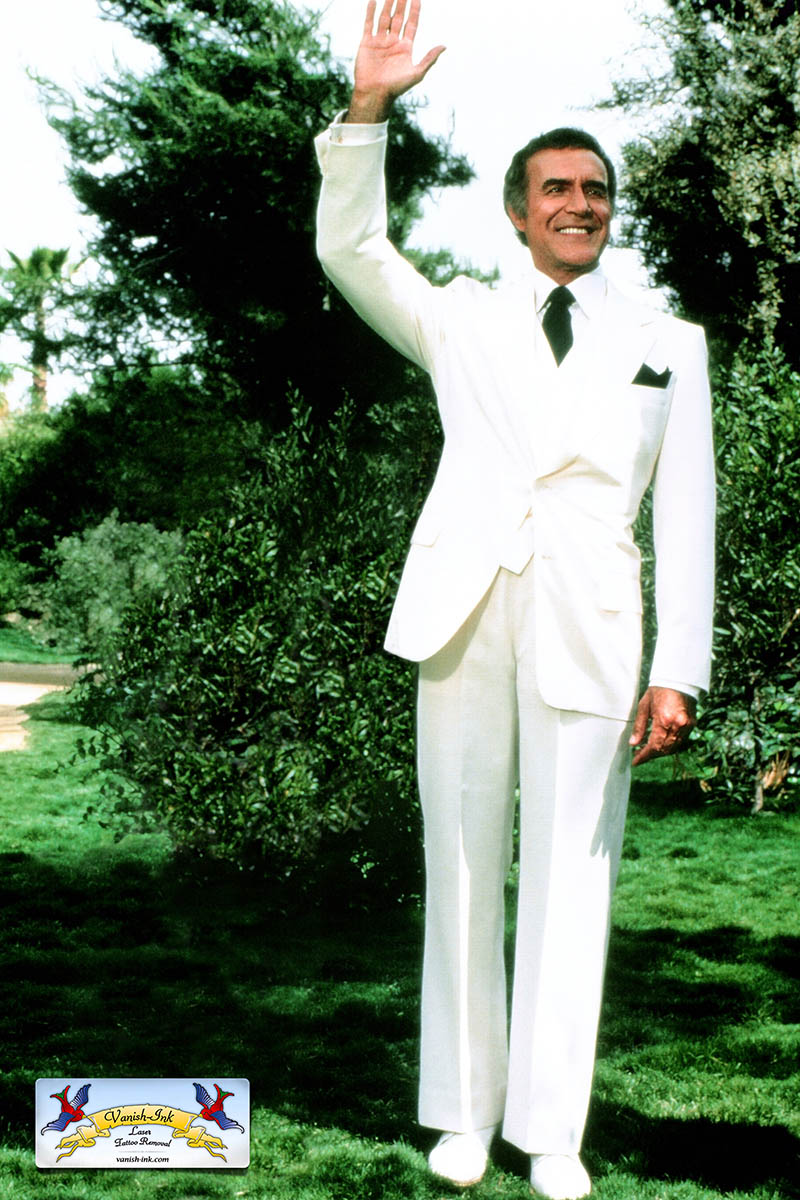
There I waited, much like Mr. Roarke from Fantasy Island, as the guests arrived. It was my job to explain the rule. In order to check in all cells phones would be turned over to me and only returned upon checking out. If a guest refused, and a few tried, I explained they could not check in. The kicker that got these men to hand their phones over to my out stretched hand was our policy of full payment at the time of booking and no refunds unless a 24 hour notice was given.

I worked at the resort for two years and in that time, only once did someone walk away. Oh the wives were in for a surprise as well. Though the no cell phone rule was in our confirmation letter, rule number 2 was not. Because there were no phones in the rooms and only one in the lobby, all incoming messages were held, unless it was an emergency, until check out. Once the husbands realized their kids could not interrupt them with complaints and sibling squabbles they were on board.

That people would pay so much money to be forced to disconnect still astounds me. Once more, many of our guests returned over and over again. But why? Why did it take such extreme measures to get someone to unplug from the world and what does it say about modern humans? Are we harming ourselves by our expectation and need for instant communication and gratification?

Neuroscience is starting to detect some changes to the brain’s chemical makeup. We are increasing our production of the stress hormone cortisol. Dr. Levitin, in his book, The Organized Mind: Thinking Straight in the Age of Information Overload explains that it is not just multitasking that releases stress hormones, our modern expectations are also beginning to wear down our frontal cortex with extra production of stress hormones.

In the days before cell phones, when we reached out using land-lines, we had no expectation that the other end would be picked up unless we called someone who was house bound. Most of the time we accepted the lack of connection. Perhaps Becky was out, or Bob was in a meeting. We made a note to call again, and moved on to something else.

Now we expect instant communication. If Becky or Bob does not answer, we begin to worry, releasing cortisol. Perhaps in small drips, but releasing it just the same. Expecting instant gratification over and over again, on a daily basis is starting to wear our brains down.

And, it’s not just our need to hear a voice on the other end of the line that is causing us stress. Studies have shown that our engagement with social media may be doing something similar.

Live Science recently posted an article titled, “What Facebook addiction looks like in the brain”. The article cites studies done on Facebook users.

The Facebook “addicts” showed greater activation of their amygdala and striatum, brain regions that are involved in impulsive behavior.

This study, while not the whole picture, does tie in to what Dr. Levitin has to say about our social media use and multitasking.

We answer the phone, look up something on the internet, check our email, send an SMS, and each of these things tweaks the novelty- seeking, reward-seeking centres of the brain, causing a burst of endogenous opioids (no wonder it feels so good!), all to the detriment of our staying on task. It is the ultimate empty-caloried brain candy. Instead of reaping the big rewards that come from sustained, focused effort, we instead reap empty rewards from completing a thousand little sugar-coated tasks.

It isn’t so much that technology is bad for our brain it’s our behavior that’s bad. We are harming ourselves without even knowing it.

All of this constantly checking Facebook for likes, using Twitter to count retweets (am I popular today?), monitoring blog comments, logging into e-mail multiple times a day and expecting someone to answer when we call is stressing us out and causing addictive like behavior in our brain patterns.

The answer? Well, you could pay me a lot of money to take away your phones and laptops, or you could take steps to control and curb your need for instant gratification.

Here are some helpful tips to get you started.

Remember that people are not always going to answer when you call. It’s okay to leave a message. Don’t start worrying that Becky or Bob are hurt or doing something fun without you. They have lives too, and might be too busy to pick up the call.

Don’t multitask unless it is absolutely necessary. Before making that call ask yourself if you really need to talk and shop, or talk while having lunch. It’s called a lunch break for a reason.

Why not pick one day a week to completely unplug? Remember those people who live with you? Why not spend the day with them, out of the house and away from technology. If nothing else, they will be a good reminder of why you gladly trade the house for your own office space, day after day.

Designate a time to answer your e-mails or get caught up on Facebook or whatever social media platform you use. When not on social media, try not to think about it. If you miss a round of cute kitten postings or a porn-food picture, don’t despair. If there is one constant to social media, it’s that whatever picture you missed will shortly come around again.

I know some of you are wondering how I am doing with my behavior experiment. I’m happy to report that I have changed my habits. I now watch the morning weather before I turn my laptop on. I’ve limited myself to one open tab at a time and have stopped checking my personal e-mail during the workday. In the evening I do my chores (no sense in worrying about what must be done while surfing the web) before I turn on my laptop and limit my Internet use. This is the easy part as you can easily guess. Those of us who read would rather unplug than watch cute kitten videos. We think of books as our own Fantasy Island.

I wonder what the brain looks like on books? Humm….

Amazing Waste

Repurposing Food and Reducing Waste

measurestillformeasure

Shakespeare, Classics, Theatre, Thoughts

Nerd Cactus

Quirky Intellect for the Discerning Nerd

Sillyverse

Stories of magic and mystery

Commonplace Fun Facts

Mind-Blowing Facts You Didn’t Know

Fictionophile

Fiction reviews, Bookblogger, Fiction book reviews, books, crime fiction, author interviews, mystery series, cover, love, bookish thoughts...

Patrick W. Marsh

monsters, monsters, everywhere

Shakespeare for Kids Books

Opening the door for kids to love Shakespeare and the classics

desperatelyseekingcymbeline

The 10-year Shakespeare New Year Resolution

Katzenworld

Welcome to the world of cats!

booksandopinions.com

The Book Reviews You Can Trust!

The Book Review Directory

For Readers and Writers

thelitcritguy

screams from the void

Author Adrienne Morris

Step Into the Past—Lose Yourself in the Story.

crafty theatre

ideas inspired by crafty characters

Critical Dispatches

Reports from my somewhat unusual life

The Nerd Nebula

The Nucleus of the Universe for all Nerd Hacks!