Midnight’s Children-Rushdie does it again


It’s Salman Rushdie’s birthday, so I thought I would pull out this old review. Have you read this book? If not, today would be a great day to start it!

From Feb, 2009

I have to start this review by admitting I love Salman Rushdie’s work. I fell in love when I read Shalimar the Clown back in July of 08. The Satanic Verses which I read next, remains one of my all time favorite books. Haron and other Sea Stories was next on my list and once again Rushdie wooed me with his words. When I finished Haron I had to make a hard decision; what of Rushdie’s do I read next?

As I researched which of his titles I wanted to tackle next, his book Midnight’s Children won the Man Booker of all Booker prizes http://www.themanbookerprize.com/news/stories/1099. This I had to read!  It took me a month, but it was well worth the time.

Midnight’s Children is a very rich (often too rich) metaphor on the birth of India as a nation. Saying the tale centers on one particular child, Saleem Sinai, who is born at the stroke of midnight of India’s independence, would be doing Rushdie injustice. Every character in this book could easily be the protagonist. This is the magic and genus of Rushdie; all his characters’ are fully developed and have amazing back stories. My favorite character was Aadam Aziz, Saleem’s grandfather. Rushdie starts the tale, as he often does, in Kashmir, (Kashmir seems to be a magic place for Rushdie) with Aziz coming home with a medical degree. Aziz is called upon to look at a local sick girl who is veiled behind a curtain. Aziz can only view her ailing body part, the rest covered with a sheet. Over time he views her body bit by bit and as he does he falls in love. This is a lovely metaphor showing the physical aspect of how we tend to fall in love; by seeing in the other person that which we want to see and ignoring the rest.

Eventually they marry and move to Bombay where most of the tale takes place. The reader is introduced to Saleem’s mother, father, aunts and uncles before Saleem is born so that by the time he is the reader is emotionally involved in his family and their secretes.

As India is born so too is Saleem, who along with all the other midnight children, is born with a gift or curse depending on how one looks at it. Saleem is born with the gift of mind reading. This leads Saleem to learn many of his family’s secretes and discover the other midnight children. These children deserve a book of their own, I am still thinking of many of them , wondering what happened to them.

The tale weaves in and out of real events both past and present. Saleem is put in the middle of many political events and causes quite a bit too! This is the one caution I would pass on to anyone thinking of reading this book; if the only think you know about India is where to find it on a globe, this book may not be for you. Rushdie assumes the reader knows the events and people he is writing about. I am very versed in India history but even I had to look up a few names to better understand what Rushdie was talking about.

Rushdie can write like no other. Every page is full of prose, metaphors, and stories. Rushdie is the only writer I can think of who can span two life times in just a couple of pages, or write as if each word was a poem unto itself. Reading him can be exhausting at times because of this, but if you stick with him, he will whisper magical verses to you and tell you a story that will stay with you for a long, long time.

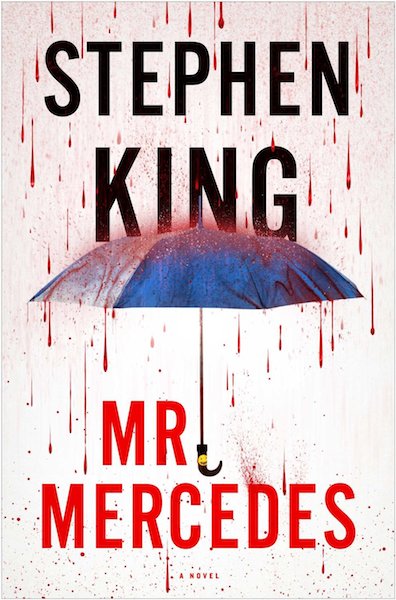
Mr. Mercedes Not what I’d expect from Stephen King

Mrmercedes

From the book’s description:

In the frigid pre-dawn hours, in a distressed Midwestern city, hundreds of desperate unemployed folks are lined up for a spot at a job fair. Without warning, a lone driver plows through the crowd in a stolen Mercedes, running over the innocent, backing up, and charging again. Eight people are killed; fifteen are wounded. The killer escapes.


In another part of town, months later, a retired cop named Bill Hodges is still haunted by the unsolved crime. When he gets a crazed letter from someone who self-identifies as the “perk” and threatens an even more diabolical attack, Hodges wakes up from his depressed and vacant retirement, hell-bent on preventing another tragedy.

Mr. Mercedes is Stephen King’s 57th novel, and is his third attempt to distance himself from the horror/supernatural genre. Who can blame the author for trying his hand at something new? This seems to be a follow up nod to the detective novel; his first being the highly acclaimed Joyland. Unfortunately this one left me, well…. uninspired.

This may sound odd as one would not think of a horror writer as inspiring, but King fans understand what I mean. King has a gift for instilling hope in the face of tragedy. We find everyday heroes, who time and time again, show us what is possible even as the odds are stacked against them. I’m thinking of Glen Bateman, Ralph Brentner, and Larry Underwood who faced with certain death, will not submit to evil. (The Stand) or Jake Epping who teaches us a very valuable lesson on fate and how sometimes memories are what keeps us going. (11/22/63) But in Bill Hodges we are introduced to yet another divorced middle-aged detective. The genre seems to demand that all great detectives be divorced and miserable. For an author who writes characters so compelling and multidimensional that fans talk about them for years afterwards, King’s latest protagonist seems run-of-the-mill. Hodges is tired of life and we can’t blame him. He has nothing going for him save the friendships (even these seem more like acquaintances than true friends) he develops with the small circle of characters King gives us.

Besides the flat characters King introduces us to (flat as in the literary term for character who serves one purpose only) I have two major issues with the book: The plot of the novel and King’s over use of the N word. Both distracted me, and left me wondering what King was thinking as he wrote this novel.

The Plot

As the description says, Bill Hodges receives a letter from a person claiming to be the Mercedes killer. This person wants to engage Hodges in an on-line conversation. I am not sure why the description says he threatens to kill again because what he really says is he is “done killing,” “I have my memories and they are clear as a bell”. After a long rant about the killing and his concern for Hodges mental state he asks for the detective’s “feedback” and invites him to join in a chat-room. Hodges’ response defies logic, given that he has a forty year career as a cop under his belt. Hodges’ response is to “wind this person up” to the point that the killer decides to kill again! As the story unfolds it is clear that most of what happens is a result of Hodges’ goading. I would be okay with this if at any point Hodges would have admitted this and taken some responsibility for what happens. Even after someone close to him dies as a result of this cat and mouse game (King calls it a fishing game) Hodges refuses to see that his need to close the case is the cause. I would expect this from James Patterson or Jonathan Kellerman but not King. This is an author who, when writing self absorbed characters does so in a way that we the reader realizes the flaw (I’m thinking Jack Torrance in The Shining). We get that part of the character’s problem is his lack of self-awareness, but not in this novel. It is as if King himself does not seem to see the flaw in his plot. The over all message of this novel shouts, “Forget the police, we can solve this ourselves!” stretched credibility. Hodges is willing to risk it all for one last shot at solving a case. Gee, where have we read this before?

The N word

I get it, we are all adults and sometimes this offensive term for African Americans shows up in literature. But King’s over-use of the word shook me out of the story. The first time we encounter the word the killer is thinking to himself as he spies on Hodges and his young black friend. The word is used to ensure that we readers become even more uncomfortable with the antagonist, but to use it over and over again to describe a family (and their dog!) got on my nerves. We get it Mr. King, the killer does not like black people, but did you need to keep reminding us of this point over and over again? Instead of drawing a picture of the killer’s mentality it made me wonder why King would feel so free to use the word. Was it a dare? Does he not understand that it is offensive to many even in it’s most casual use? It felt like a gratuitous use of this term and pulled me from the story. This is not something I would expect from a writer like King.

Maybe uninspired is the wrong word. Maybe I should say it is a disappointment. While 11/22/63 remains my favorite book of 2013 and one of my all time favorite books overall, this is the most disappointing books I’ve read in 2014.

I’d love to hear what you think. Have you read it? And if so, what is your take on the plot, the female body count and King’s newest characters.

Amazing Waste

Repurposing Food and Reducing Waste

measurestillformeasure

Shakespeare, Classics, Theatre, Thoughts

Nerd Cactus

Quirky Intellect for the Discerning Nerd

Sillyverse

Stories of magic and mystery

Commonplace Fun Facts

Mind-Blowing Facts You Didn’t Know

Fictionophile

Fiction reviews, Bookblogger, Fiction book reviews, books, crime fiction, author interviews, mystery series, cover, love, bookish thoughts...

Patrick W. Marsh

monsters, monsters, everywhere

Shakespeare for Kids Books

Opening the door for kids to love Shakespeare and the classics

desperatelyseekingcymbeline

The 10-year Shakespeare New Year Resolution

Katzenworld

Welcome to the world of cats!

booksandopinions.com

The Book Reviews You Can Trust!

The Book Review Directory

For Readers and Writers

thelitcritguy

screams from the void

Author Adrienne Morris

Step Into the Past—Lose Yourself in the Story.

crafty theatre

ideas inspired by crafty characters

Critical Dispatches

Reports from my somewhat unusual life

The Nerd Nebula

The Nucleus of the Universe for all Nerd Hacks!