Ovid, Phaethon & Climate Change

We’ll scorch the earth, set fire to the sky

We stoop so low, to reach so high

U2 Red Hill Mining Town

img_helios

Ovid begins Book 2 with the tragic story of Phaethon.  This is the longest single story of Metamorphoses and so far the one I have found to be most profound. The story of Phaethon should be read as a metaphor for man’s self-deluded idea that humans can manipulate nature without consequence.

Phaethon, a young man, travels to the Palace of the Sun determined to meet Phoebus and find out if the sun god is in fact his father. Phoebus says he is. To prove it, he will give Phaethon anything he wants, swearing by the River Styx that he will grant Phaethon his wildest dream. The boy’s dream is to ride Phoebus’s chariot. Although his father warns him that no god save him (let alone a human) can control the horses and safely ride the chariot across the sky, Phaethon will not listen. His youthful arrogance allows him to believe he is as mighty as the god who sired him. As soon as Phaeton takes flight however, his excitement changes to abject fear. He realizes that he is not able to control his father’s chariot. As the horses gallop wildly out of control, the earth suffers as the chariot draws nearer. Moisture evaporates, mountain and forest are burned, rivers dry up, and the oppressive heat confines Neptune to the sea. To prevent the entire planet from burning, Jupiter sends loose a thunderbolt that kills Phaethon and drives the horses into the sea.

The young Phaethon is driven to seek his father out because of his desire to be god like. His mother has always declared his absent father to be the sun god, yet his peers mock this idea. Phaethon goes in search of the truth as he is convinced he is the son of the sun, which in Greek and Roman mythology is the source of universal power. He asks to drive the chariot, a metaphor for the sun’s journey across the sky, to prove to all that he is as powerful as his father. Tragically for young Phaethon he learns to late that he is no match for his father. Phaethon comes perilously close to destroying the earth but is killed before he can do so.
global-warming

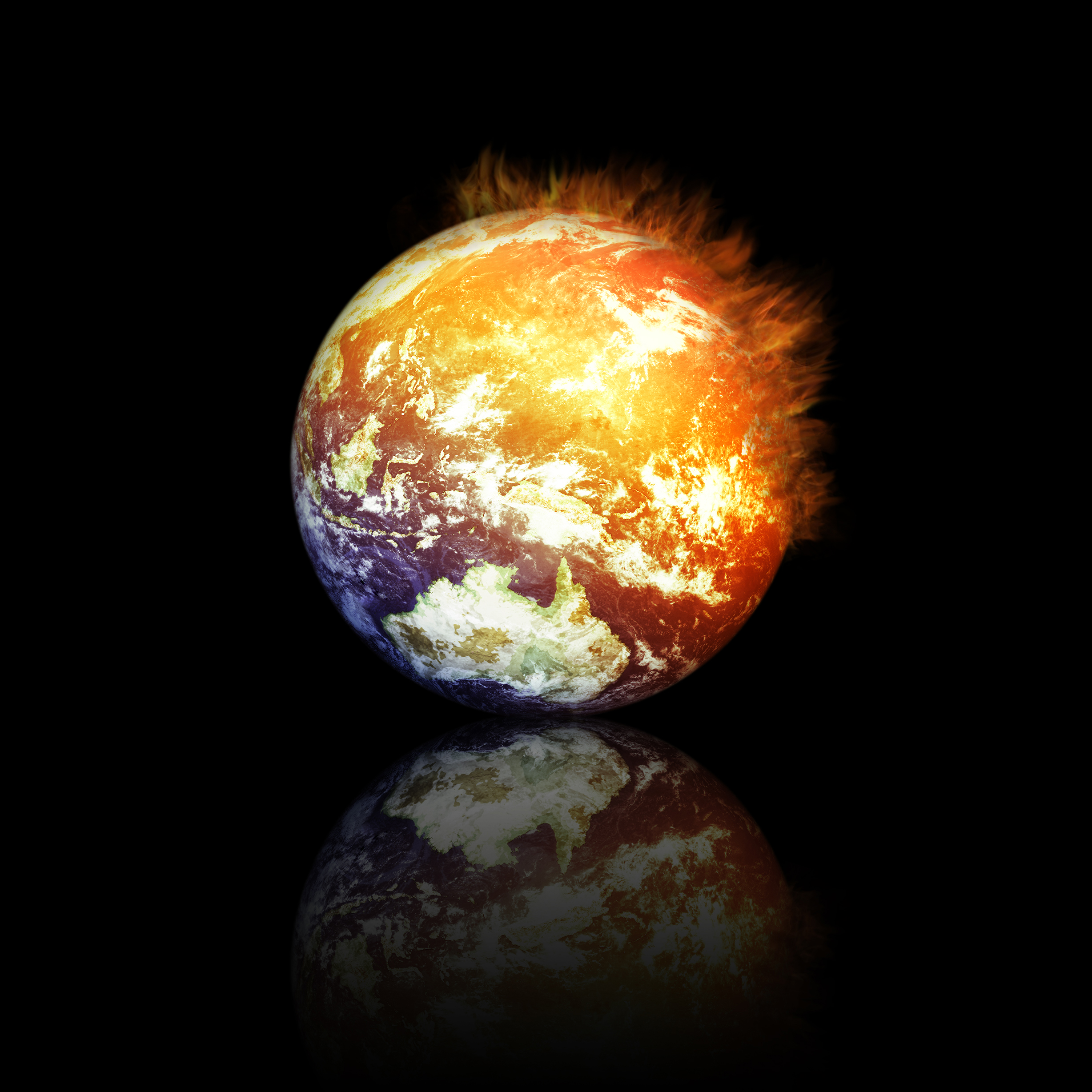
Phaethon’s story could be our story. We humans have deluded ourselves into believing we are able to control the reins of nature, even as we scorch and pollute the earth.

In the story the earth looks up at the gods and through the smoke cries out:

Look at my singed hair, look at the ashes coating my eyes and face! Is this the respect that you show me?

Is this the reward for the crops that I yield and the service I render, bearing the wounds of the plough and harrow, harshly exploited and working from one year to the next, supplying the grazing cattle with wholesome verdure, the grains to nourish the human race?

If the earth could talk these may be the very questions she asks of us today. What I find most troubling is that those who believe a god created the universe are usually the ones who believe the most fervently that man has the ability to control and manipulate nature without consequence. Most climate change deniers are fundamental Christians who fervently assert that being sons of a god allows them the right to do what they like with the planet and that their god would never allow its total destruction, even as we see the damaging effects man has inflicted. It never occurs to them that their god like Phoebus can only watch as man uses the gift of free will.

Ovid’s story of Phaethon was a warning to the ages that humans do not have god like powers and that it is folly to even try. Man cannot create beautiful sunrises and sunsets but he can surely destroy the earth from which we watch them on.

phaethon

Metamorphoses: Intro & The Flood

metamorphoses-ovid-cd-cover-art

Publius Ovidius Naso (or Ovid as we know him) was born on March 20th 43 BCE, in the small town of Sumo, not far from Rome.  We are told he was a brilliant student who excelled in rhetoric. But rather than becoming a Roman statesman’s as his father wished, Ovid devoted his life to poetry. By the time he was thirty, Ovid had made a name for himself with the publication of his Amores poems. We remember him as the author of Metamorphoses, an epic poem spanning the beginning of time down to his own day. Ovid retooled Roman and Greek myths, giving his readers a comprehensive story of the many interactions between Gods and man, linked together by the theme of transformation or “metamorphoses”. His epic tale was so successful that almost every retelling of Roman and Greek myths since the fall of Rome have been Ovidan myth.

Here is what Penguin Classics has to say about Ovid’s Metamorphoses:

  1. Ovid’s myths cover an extraordinary range of experiences and he displays a penetrating psychological knowledge of the variety of human and motivations and delusions.
  2. The main connecting thread is an interest in identity: what is it about a person that makes them that person, and what is it about humans that make them human?
  3. Epic for Ovid is not just a narrative genre, but a way of viewing the world.
  4. Ovid is not inventing an issue but responding to something already there in his models.

If you are a student of Shakespeare these four quotes may sound familiar. Scholars have said the same things about world’s most famous playwright. The noted critic Harold Bloom went so far as to say “Shakespeare invented what it means to be human”.
It is no coincidence that both writers have been credited for covering such extraordinary ranges of experiences and penetrating the human psyche. Ovid’s grand epic was Shakespeare’s favorite piece of writing. Having only gone through the first three Books of the fifteen that make up Metamorphoses, it is clear to me that Shakespeare was very much influenced by the poem. If we take a step back from the plays we can see there is a running theme of transformation found in almost all of them.
The reason I picked up Metamorphoses was due to its influence on Shakespeare. I wanted to read first hand the stories that enthralled the young boy Will Shakespeare, and if I could find the adult William Shakespeare in them.
Immediately I was pulled in Ovid’s world. Having taken and enjoyed a few university courses on religions I was mesmerized by Ovid’s take on the chaos myth. By the third tale I let my quest for Shakespeare take a backseat while Ovid steered my mind back to a time when Gods fought and loved mankind. When the extraordinary was the norm.
rome-is-flooded
This intro to Metamorphoses is now longer than I anticipated it would be. Instead of talking about two stories, The Flood (Book 1) and Phaethon (Book2), I will just make a brief comment about The Flood and save Phaethon for my next post.

For those not reading along, Jove is furious by a slight made by the human King Lycaön. So in a fit of rage, he declares he will wipe out the entire human race with a flood. Other gods worried about the lack of worshippers “Who will bring to our altars the offerings of incense? Is earth to be left to the mercies of raving wild beasts?” Oh can’t you just feel their compassion towards humanity? Jove declares he will take care of them with promises of a “race of miraculous birth, unlike the people before it”. (In case you are wondering, the creation story included spontaneous generation, something the ancient Greek, Anaximander taught. How else do you get mice in a closed barn of hay?)

What struck me as I read about the flooding of the world was Ovid’s exclusion of scenes of the wicked drowning (Jove says that there are many wicked men) but of the temples and alters slowing sinking and toppling. “…houses and shrines with their scared possessions were swept to oblivion”.

I have to ask, “What is Ovid saying?” Is he making the point that the gods are merciless, that so many had to die because a few offended the gods? Or is he pointing out that faithful worship is futile because the gods do what they want and disregard humanity? Finally, could this be a political comment, Ovid’s attempt to show the destructive nature of conquest?

Ovid grew up during the reign of Augustus, a relative peaceful time for Rome. Yet Augustus greatly expanded the empire moving into the east and west, wiping out indigenous cultures and replacing flooding them with Rome’s beliefs and values. Perhaps Ovid had something to say about this, or perhaps not. For those of you reading along or having already read the poem, tell me what you got from The Flood (there is more to discuss about this story) or if you like any other story from Book 1.

Later this week Phaethon

Amazing Waste

Repurposing Food and Reducing Waste

measurestillformeasure

Shakespeare, Classics, Theatre, Thoughts

Nerd Cactus

Quirky Intellect for the Discerning Nerd

Self-Centric Design

The art of designing your life

Sillyverse

Stories of magic and mystery

Commonplace Fun Facts

Mind-Blowing Facts You Didn’t Know

Fictionophile

Fiction reviews, Bookblogger, Fiction book reviews, books, crime fiction, author interviews, mystery series, cover, love, bookish thoughts...

Patrick W. Marsh

monsters, monsters, everywhere

Shakespeare for Kids Books

Opening the door for kids to love Shakespeare and the classics

desperatelyseekingcymbeline

The 10-year Shakespeare New Year Resolution

Katzenworld

Welcome to the world of cats!

booksandopinions.com

The Book Reviews You Can Trust!

The Book Review Directory

For Readers and Writers

thelitcritguy

screams from the void

Author Adrienne Morris

Step Into the Past—Lose Yourself in the Story.

crafty theatre

ideas inspired by crafty characters

Critical Dispatches

Reports from my somewhat unusual life